
2026 Volkswagen T7 LWB Shoreline Campervan Conversion
This 2026 Volkswagen T7 L2 H1 came to Revampavan from a customer in Lymington looking for a genuinely
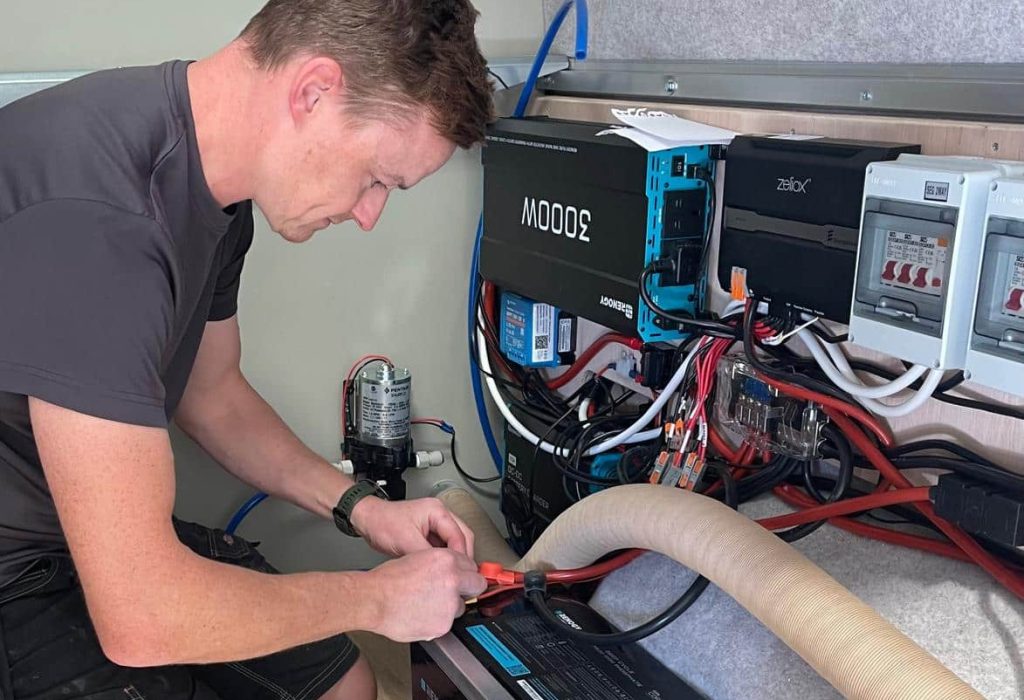
A well-designed electrical system makes your campervan more comfortable, practical and independent when you’re away from mains power.
Revampavan designs and installs campervan electrical systems, leisure batteries, lithium battery upgrades, solar panels, inverters, charging systems and 12V/240V power from our workshop in Christchurch, Dorset.
From a straightforward leisure battery installation to a complete off-grid power setup, we can build the system around how you actually intend to use your van.
We work with leading equipment and power systems including Renogy, Victron Energy and Eberspächer Zeliox, alongside Renogy and Fogstar lithium leisure batteries and solar equipment from Photonic Universe.
There isn’t one electrical package that suits every campervan.
Someone using their van for occasional weekends away may only need lighting, USB charging and a fridge. A customer planning longer off-grid trips could need lithium battery storage, solar charging, an inverter and enough capacity to run significantly more equipment.
We can design systems around requirements including:
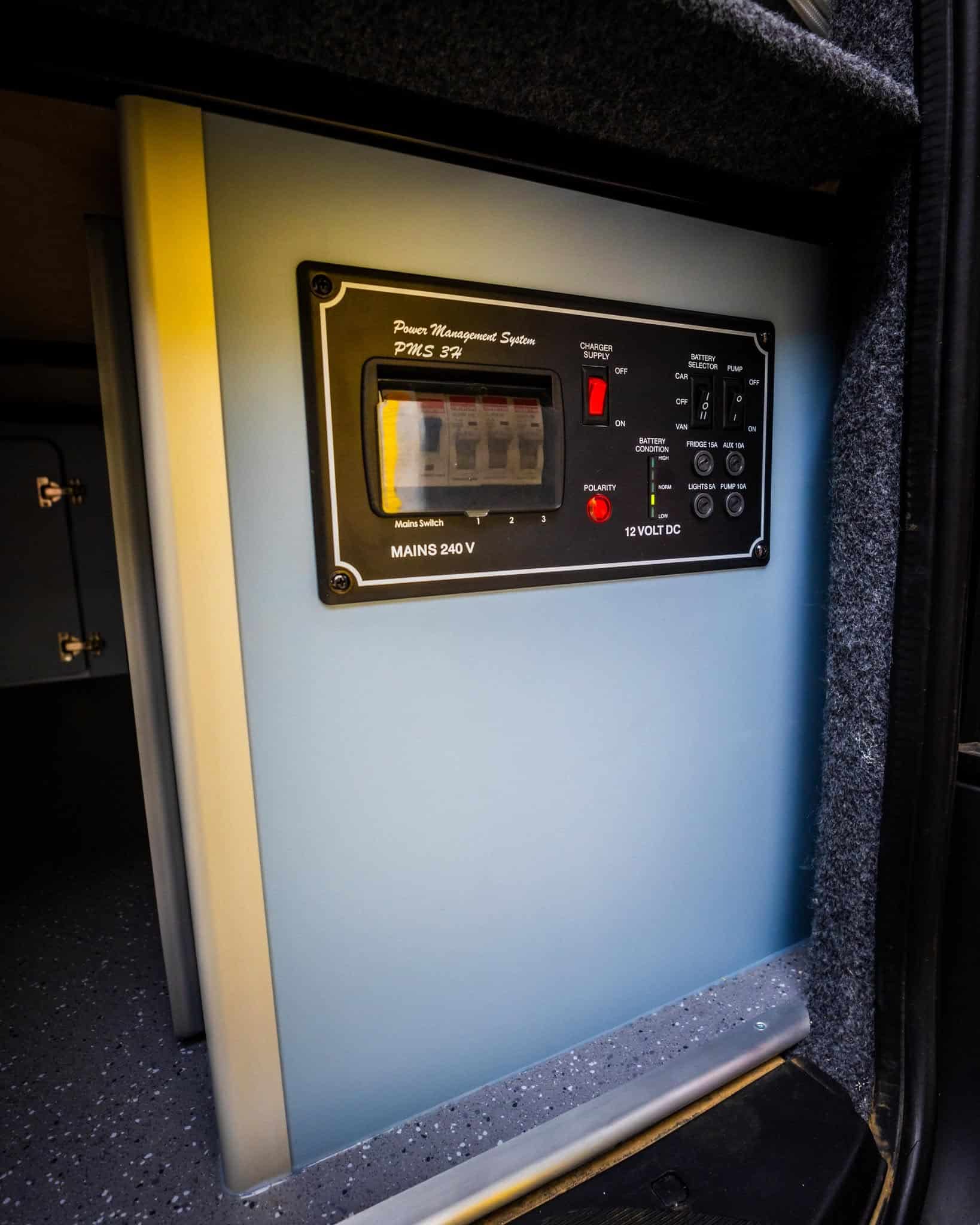
Most campervan electrical systems use a combination of 12V power from the leisure battery and, where required, 240V power from campsite hook-up or an inverter.
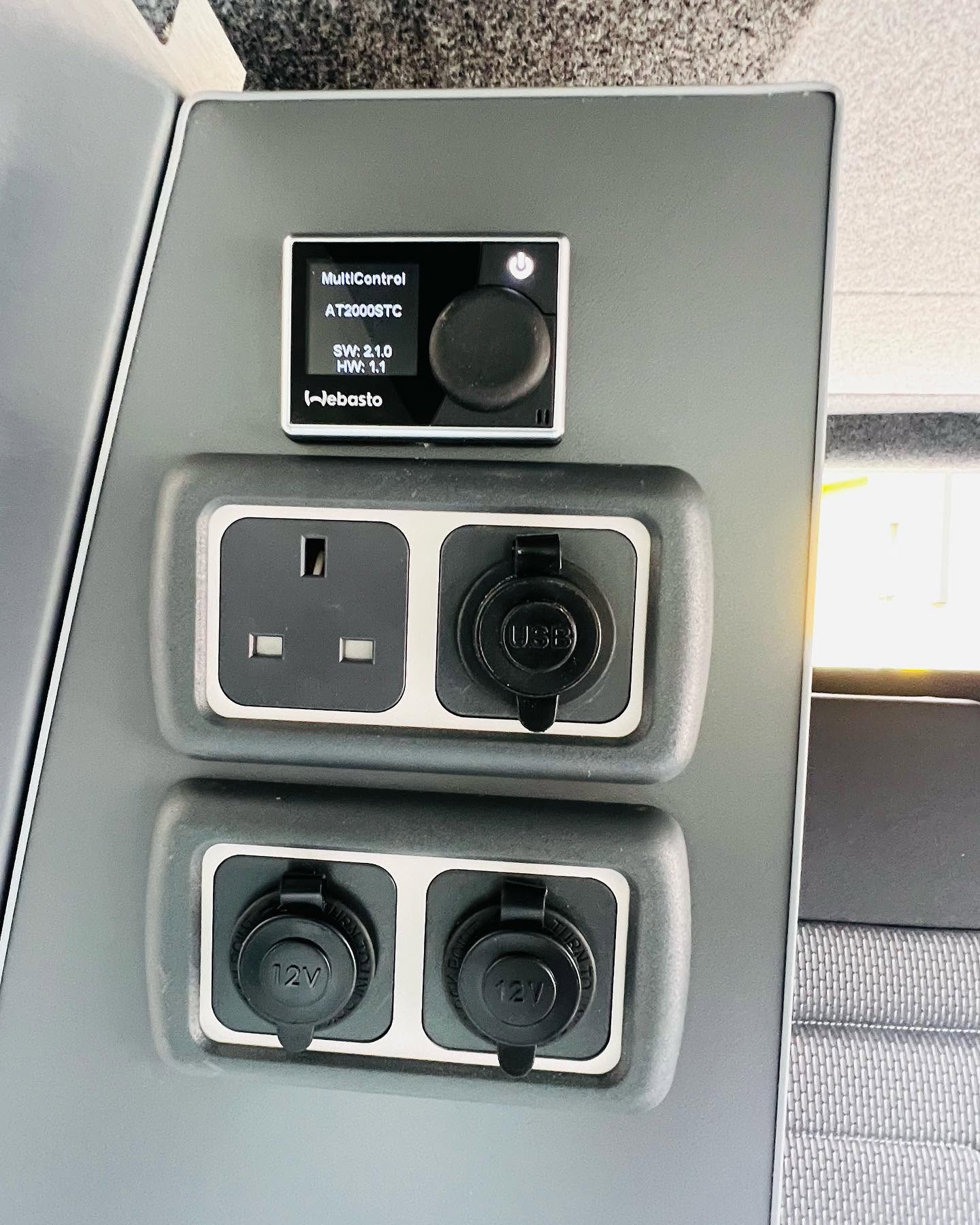
12V can be used for equipment such as lighting, water pumps, USB charging and many campervan fridges.
A 240V system can provide conventional mains sockets when connected to an external hook-up. With a suitably specified inverter and battery system, selected 240V appliances can also be powered when you’re away from mains electricity.
We’ll design the setup around what you actually want to power rather than installing equipment you don’t need.
Your leisure battery stores the energy used by the equipment in the living area of your campervan without relying directly on the starter battery.
The right battery capacity depends on:
Revampavan can install new leisure batteries as part of a conversion or upgrade an existing campervan power system.
Lithium batteries are increasingly popular in campervan conversions where customers want more usable energy and improved off-grid capability.
Revampavan works with lithium battery options including Renogy and Fogstar.
Fogstar’s current Drift range, for example, is specifically marketed for campervan, marine and off-grid applications and includes capacities from compact seat-base batteries through to much larger battery banks.
Lithium can be particularly useful if you want to run:
We’ll size the battery system around your expected power consumption rather than simply fitting the largest battery available.
Knowing how much power you have left is just as important as having a large battery.
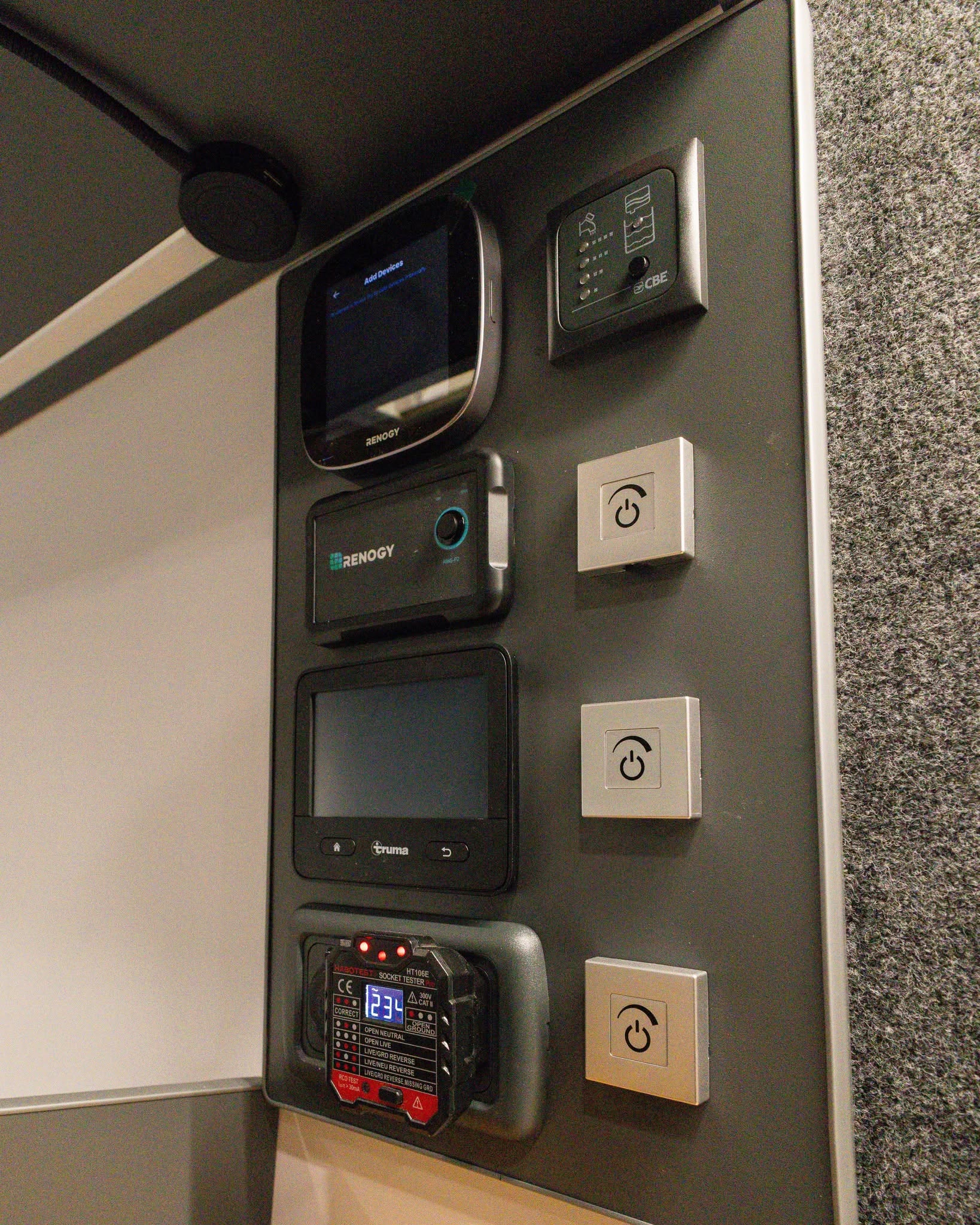
Depending on the equipment selected, your electrical system can include monitoring for:
Some modern Renogy, Victron, Fogstar and Zeliox systems also provide app-based or wireless monitoring depending on the individual component.
Your leisure battery can also be charged from the vehicle while you’re travelling.
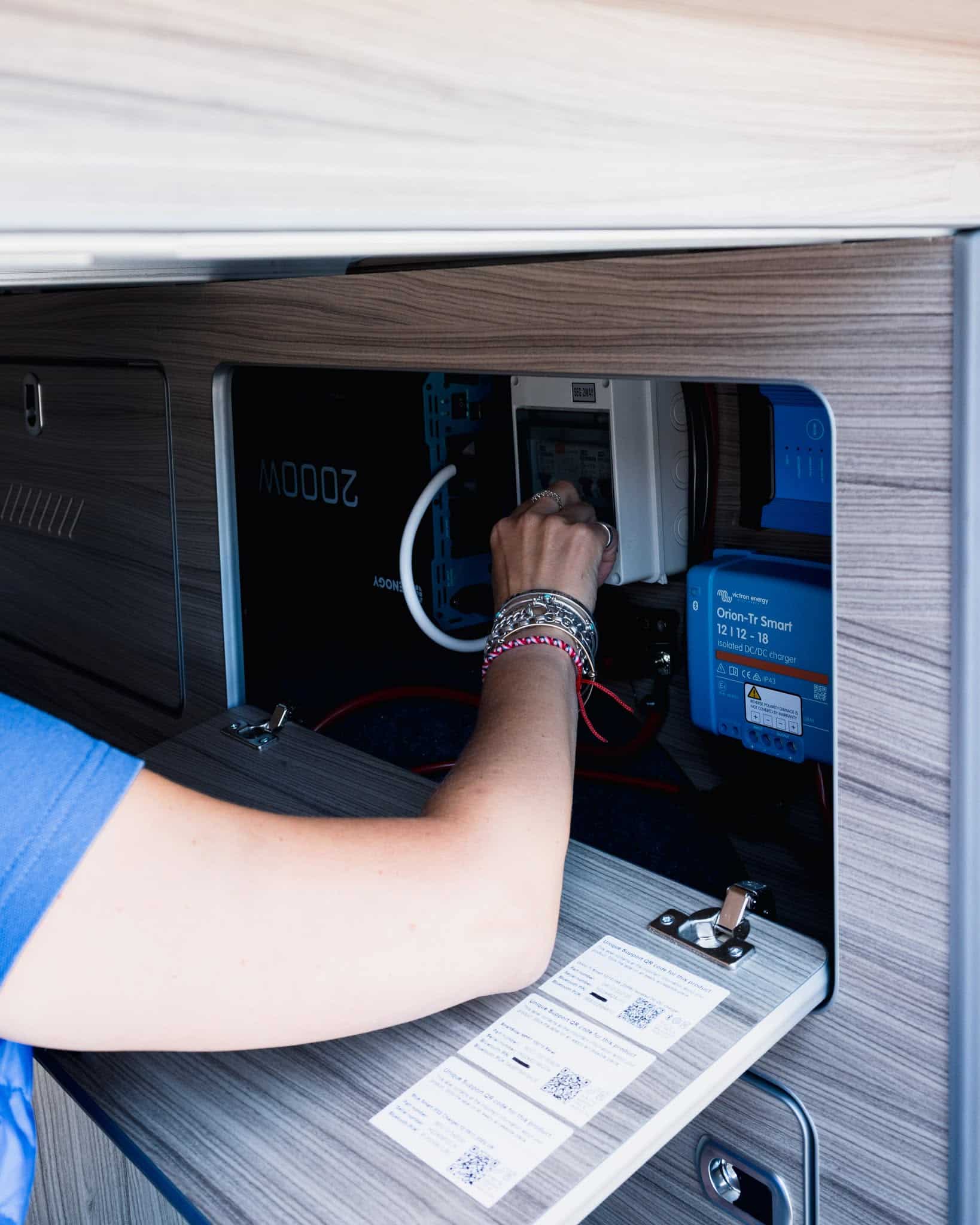
Modern campervan installations commonly use a DC-DC charger, which takes power from the vehicle charging system and provides controlled charging to the leisure battery.
This can work alongside solar so the battery continues to receive power whether you’re driving or parked in daylight.
Systems from manufacturers such as Renogy and Victron are designed specifically around this type of multi-source charging.
An inverter converts energy stored in the campervan’s battery into 230/240V AC electricity, allowing suitable household-style appliances to operate while you’re away from mains hook-up.
The correct inverter size depends entirely on the equipment you want to run.
You might only need power for a laptop and chargers, while a more comprehensive system could be designed around higher-demand appliances.
Larger inverter systems require appropriate battery storage, cabling, protection and charging capacity, so the complete electrical system needs to be considered together.
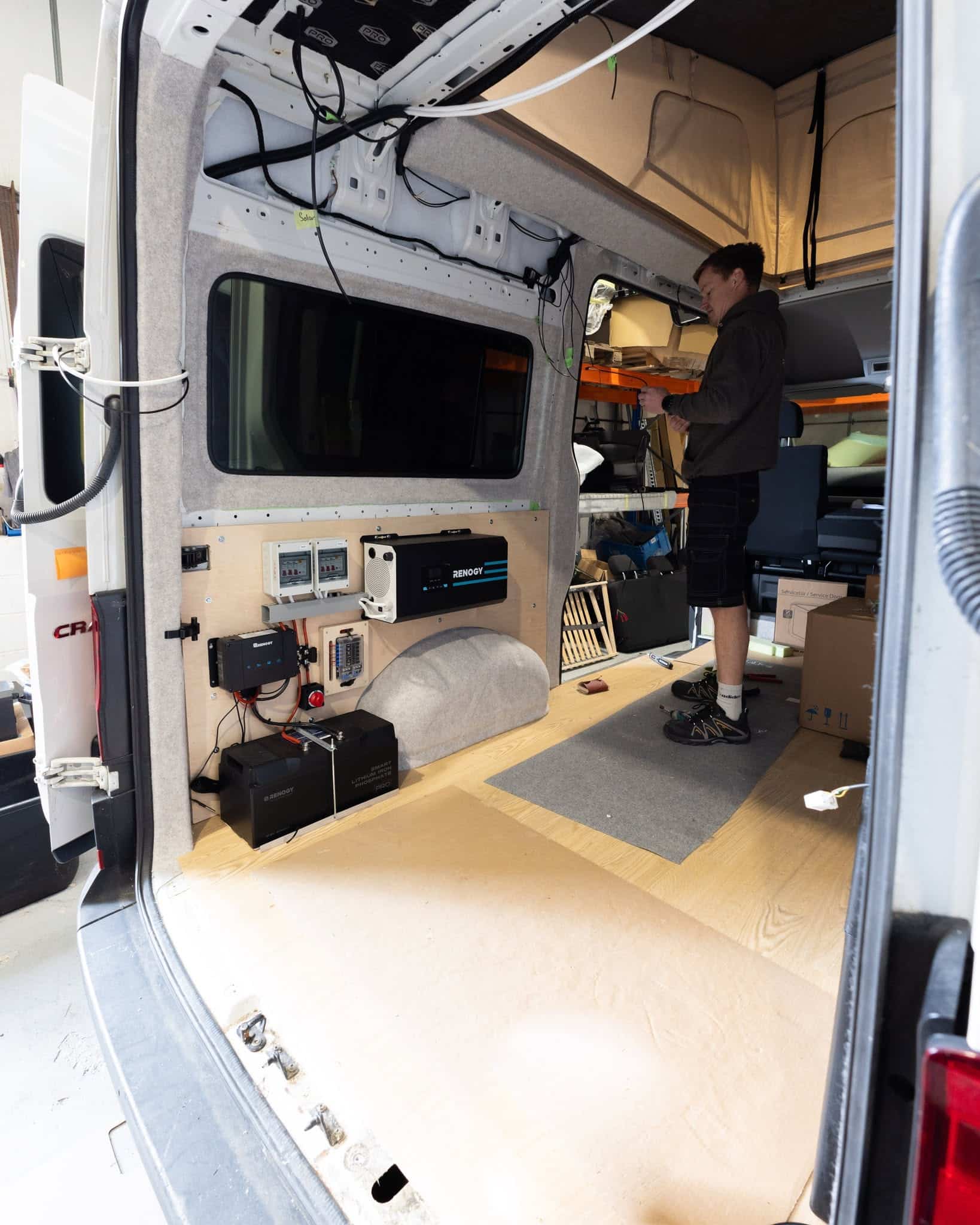
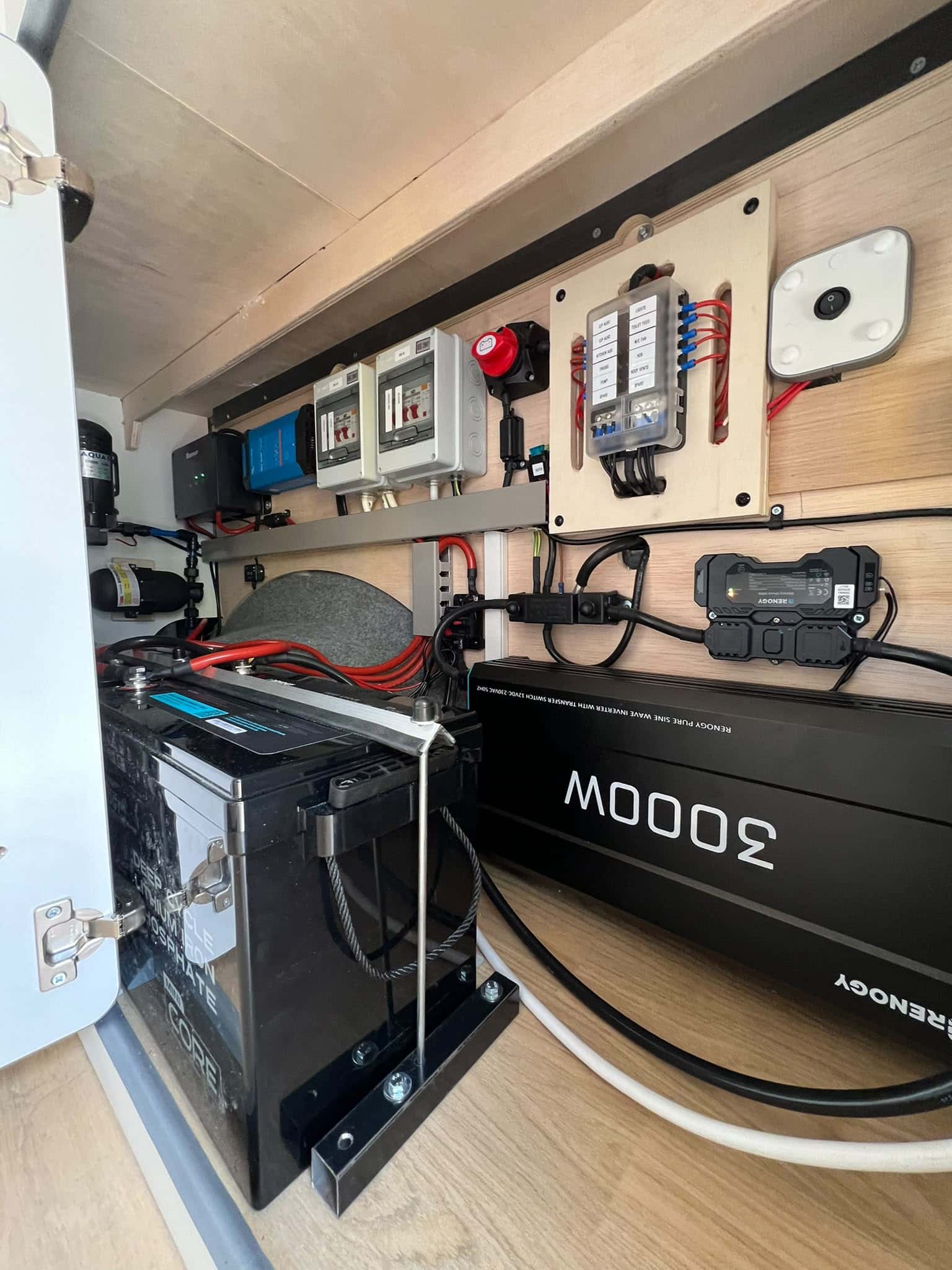
Renogy produces a wide range of equipment specifically suited to campervans and motorhomes, including lithium batteries, solar panels, DC-DC chargers, inverters and complete power kits.
Renogy’s current campervan range includes systems that combine lithium battery storage, solar charging, DC-DC alternator charging and inverter power. Its DC-DC/MPPT chargers can also accept power from both the vehicle alternator and solar panels.
A Renogy-based setup can work particularly well where you want several parts of the electrical system to operate together within one ecosystem.
Victron Energy is another leading option for more comprehensive campervan electrical installations.
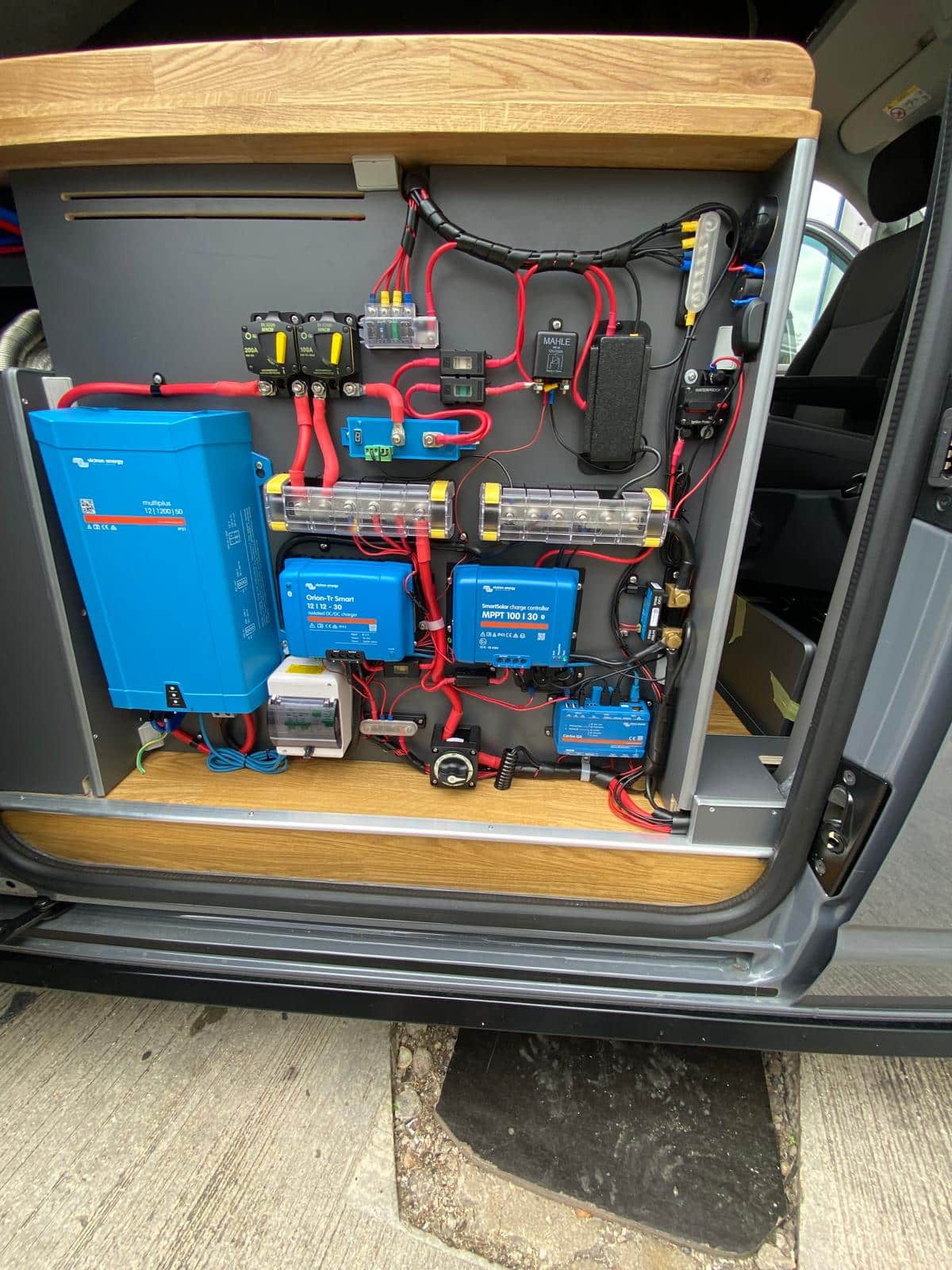
Victron systems can incorporate components such as:
Victron specifically designs systems for recreational vehicles, with solutions covering alternator charging, solar charging, shore-power charging and inverter power.
Its inverter/charger systems can combine battery charging from mains hook-up with the ability to convert stored battery power into conventional AC electricity when off-grid.
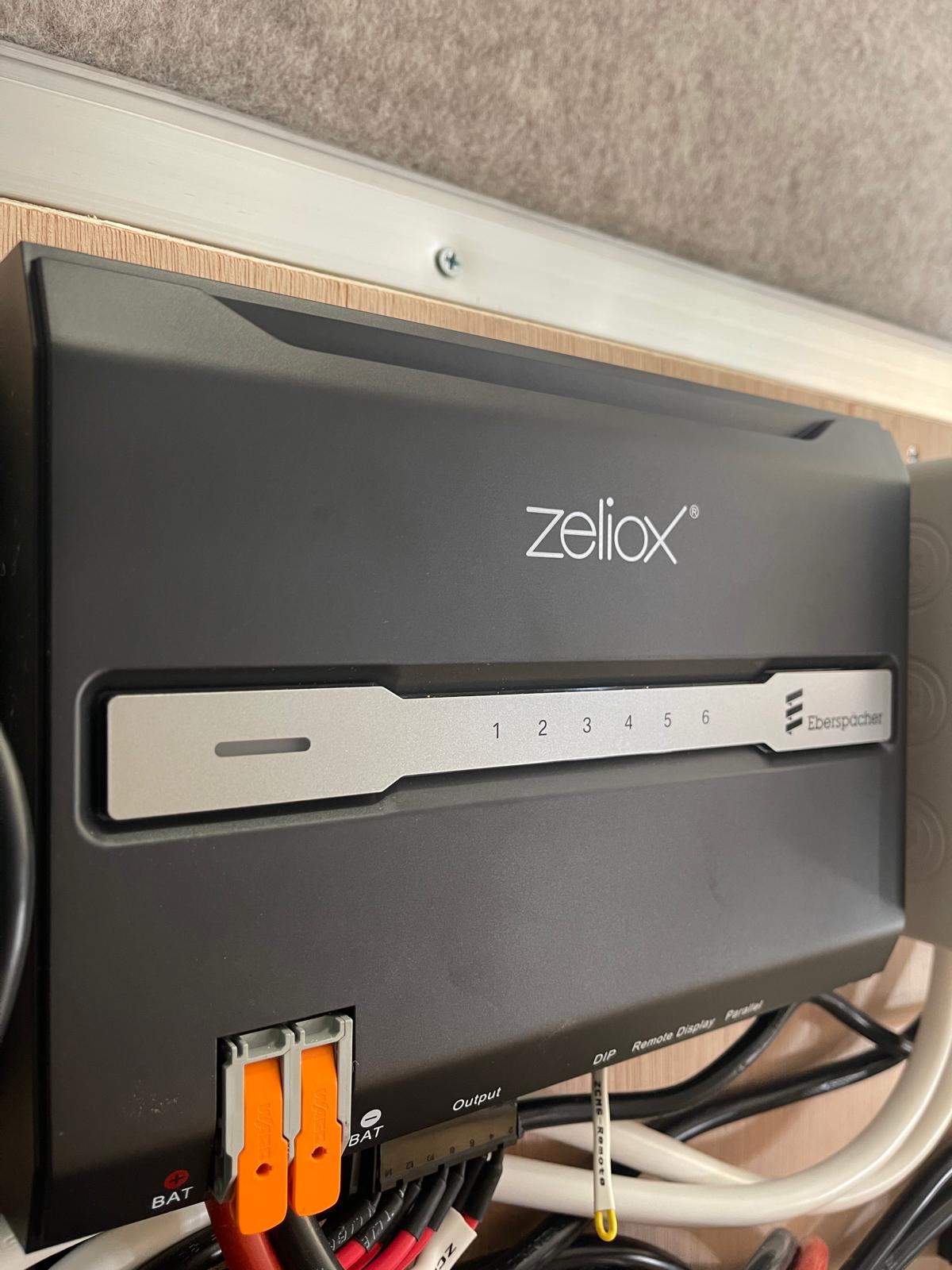
For customers looking for a more integrated power solution, Revampavan can also work with Eberspächer Zeliox systems.
Zeliox combines battery storage, charging and power management within an all-in-one mobile energy system. Eberspächer states that Zeliox systems can be charged while driving using DC-DC charging, from shore power or through solar using an integrated MPPT controller.
This type of system can be particularly attractive where you want substantial off-grid power without building the electrical installation from numerous separate components.
Different Zeliox configurations are available depending on the amount of power required.
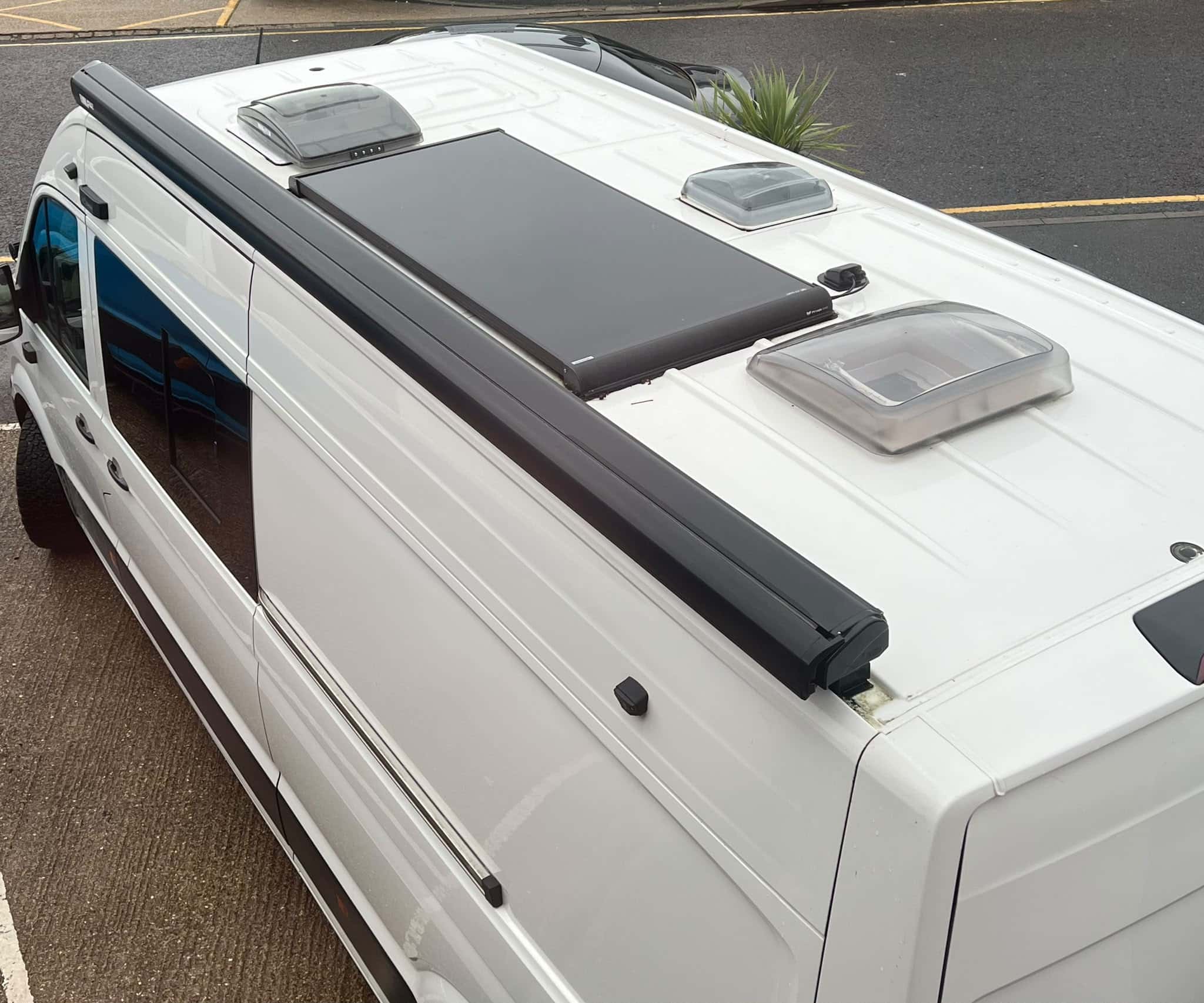
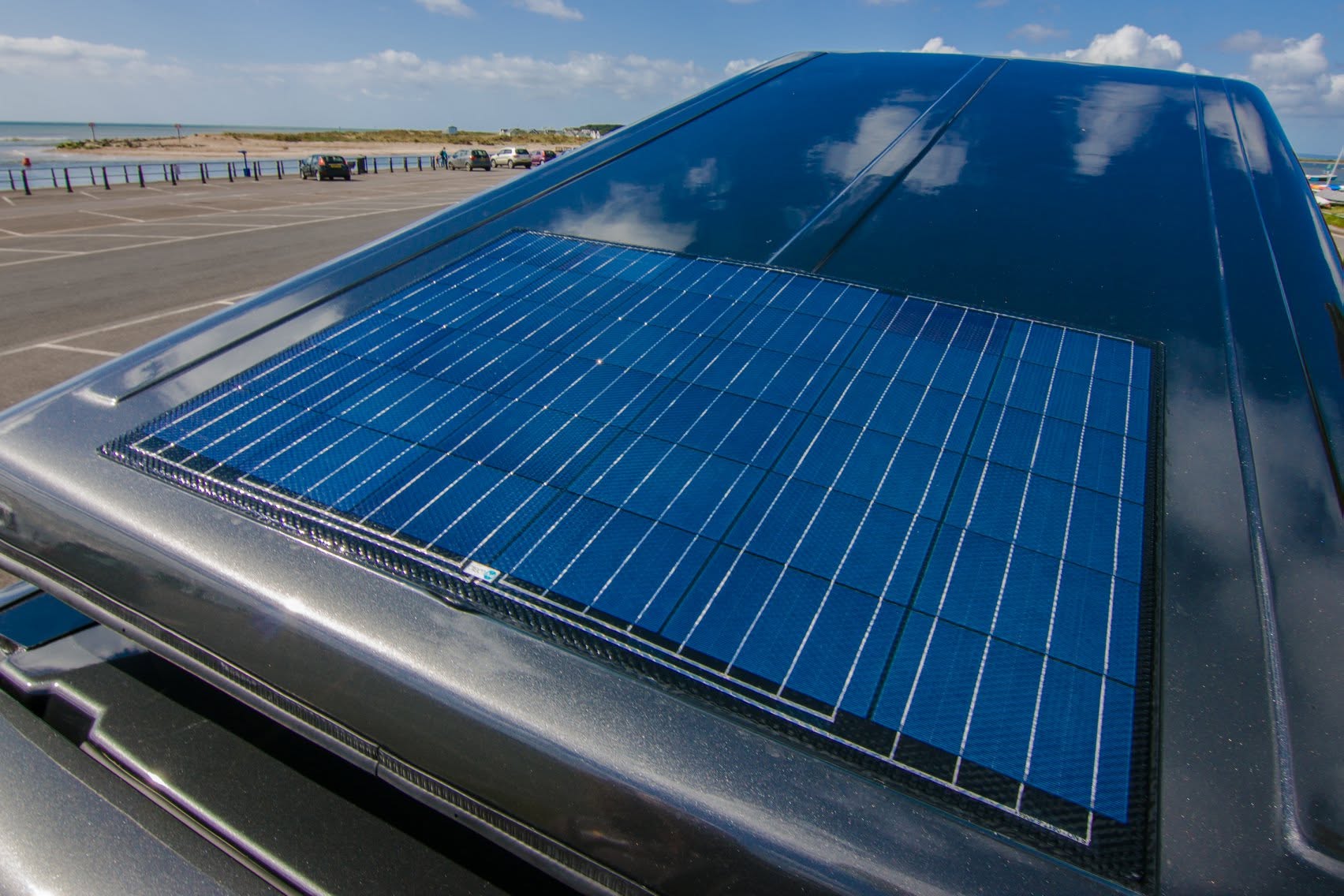
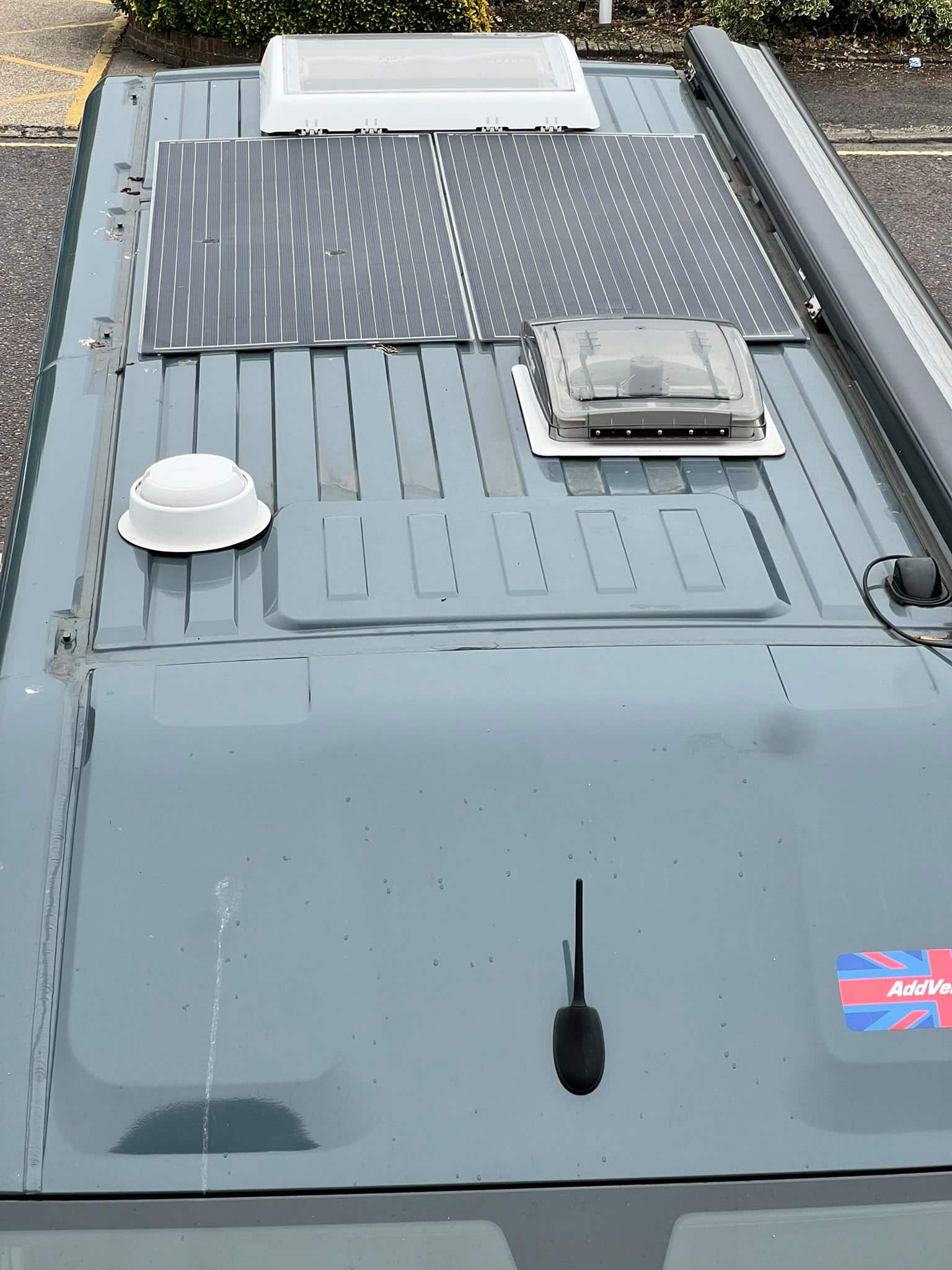
Solar panels help replenish your leisure battery whenever sufficient daylight is available, reducing your dependence on campsite hook-up or driving purely to recharge the battery.
Revampavan installs campervan solar systems using equipment from suppliers including Photonic Universe.
Photonic Universe offers both rigid and semi-flexible solar panels specifically for campervans and motorhomes, alongside MPPT controllers and complete charging systems.
Depending on your van and available roof space, we can design a system around:
More solar isn’t automatically better.
The right panel size depends on the amount of roof space available, your battery capacity, how much power you use and the time of year you intend to travel.
A typical solar system consists of the panel itself, a charge controller and the leisure battery. MPPT charge controllers are commonly used to manage the power coming from the panel and charge the battery efficiently.
We can help size the system around your individual van and electrical requirements.
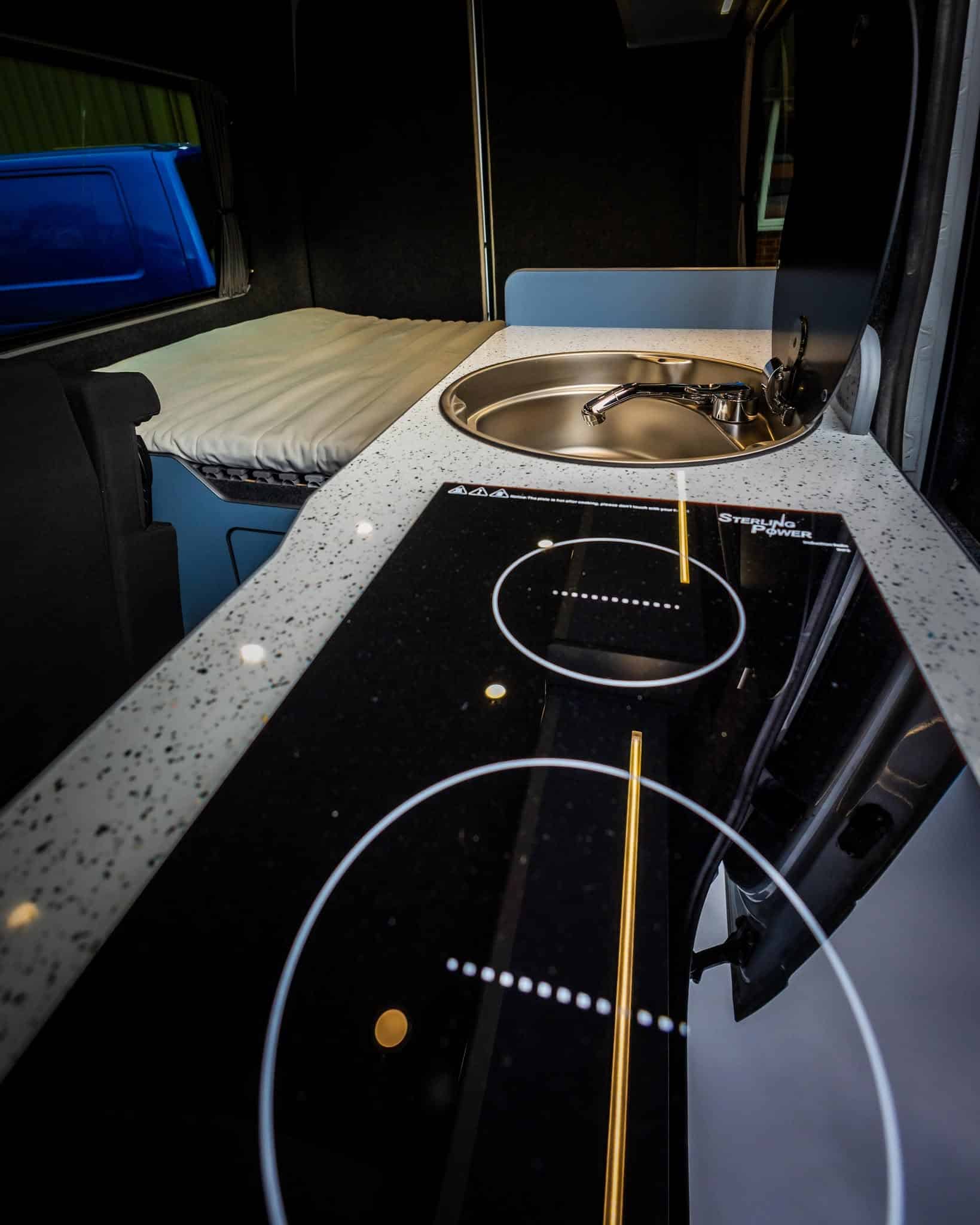
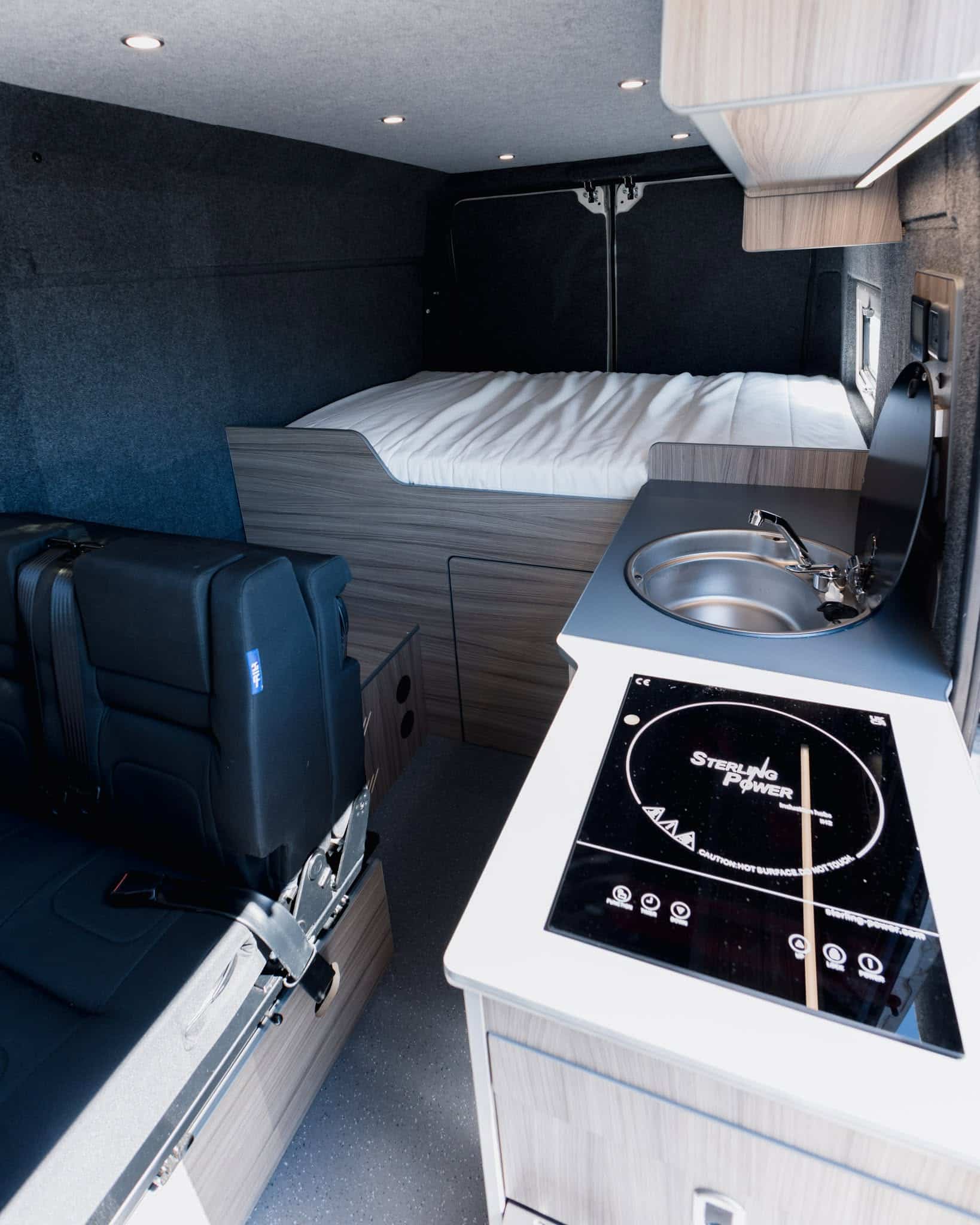
More customers are choosing electrical cooking rather than relying entirely on gas.
If you want an induction hob, the battery, inverter and charging system need to be designed to cope with the additional electrical load.
This is where larger lithium battery banks, solar panels and properly sized inverter systems can become particularly important.
Tell us what equipment you intend to run and we’ll design the system around it.
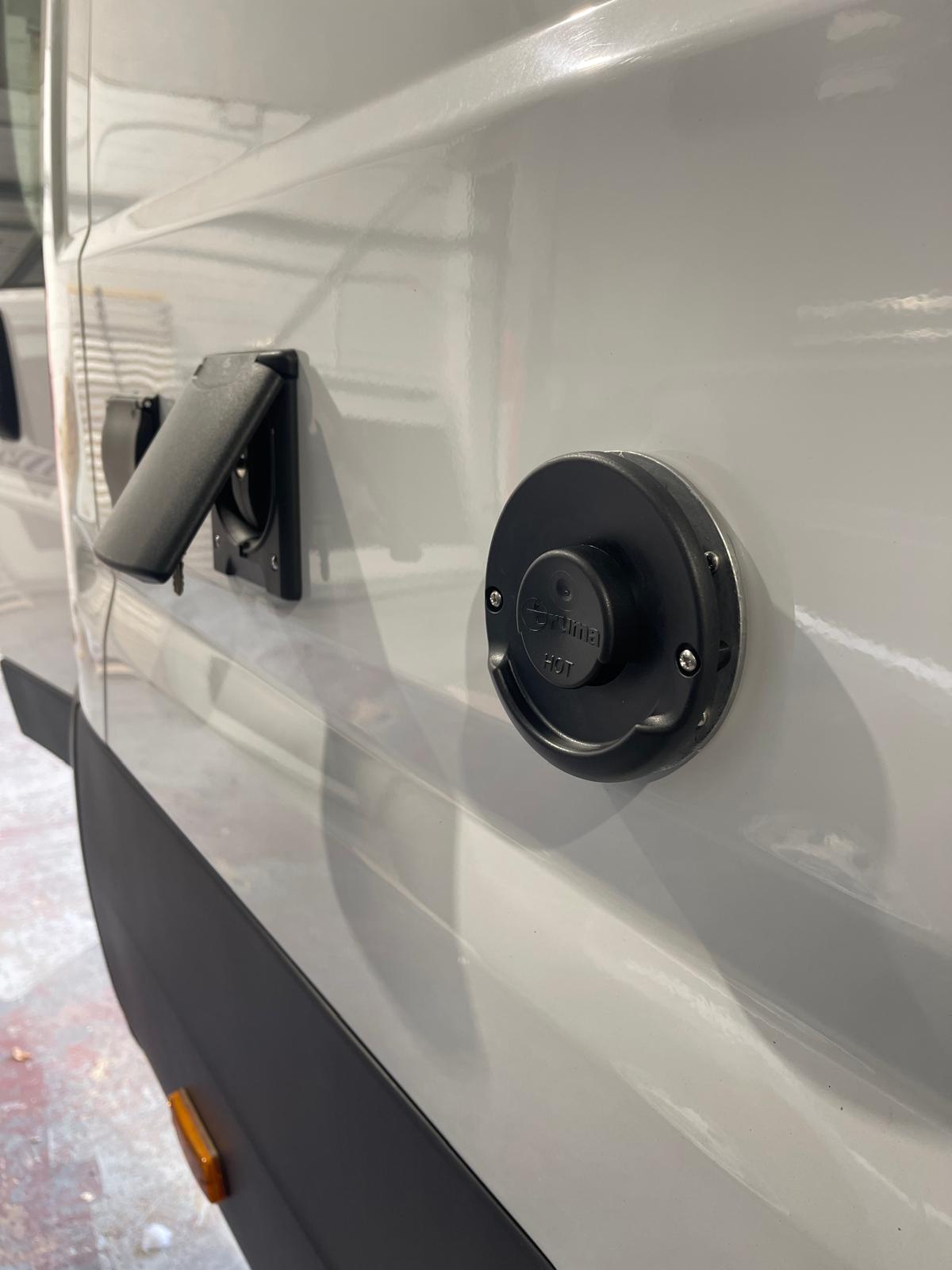
A mains hook-up allows the campervan to connect to a campsite or external 230/240V electricity supply.
Depending on the system, shore power can:
Power mains sockets
Recharge the leisure battery
Run appliances without drawing from the battery
Victron explains that a campervan shore-power setup typically feeds through an external inlet and electrical protection before supplying a charger or inverter/charger.
A hook-up can be installed alongside solar and vehicle charging so you have several ways to keep your campervan powered.
Not everyone needs a huge electrical installation.
Revampavan can create anything from a straightforward setup for occasional weekends away to a considerably more advanced system for longer-distance touring.
Ideal for basic trips away.
Typically focused around lighting, USB charging, a fridge, leisure battery and simple charging.
Designed for customers spending more time away.
Could incorporate increased battery capacity, solar panels, DC-DC charging and additional sockets.
For customers who want greater independence from campsites.
This could combine lithium battery storage, larger solar capacity, an inverter, advanced charging and monitoring, depending on your requirements.
We won’t prescribe a fixed system before understanding what you actually need to power.
It depends on how much power you consume and how long you want to stay away from external charging. We'll consider your fridge, lighting, chargers, heating, cooking and other equipment before recommending a battery capacity.
Lithium is particularly useful for customers wanting greater usable battery capacity, more powerful electrical systems or longer periods off-grid. Whether it's worthwhile for you depends on how you use the van.
We can work with lithium leisure battery systems including Renogy and Fogstar, depending on the required installation and specification.
Yes, subject to assessing the existing electrical system. Charging equipment may also need to be changed to ensure compatibility with the new battery.
Yes. We install campervan solar systems, including options using equipment from Photonic Universe.
Solar can significantly extend the time you can spend away from hook-up, but generation depends on panel size, weather, season and your power consumption.
An MPPT solar charge controller manages the power produced by the solar panels and converts it into suitable charging power for the leisure battery.
Yes. A suitable DC-DC charging system can use power from the vehicle to recharge the leisure battery while the engine is running.
Yes. Many modern campervan systems combine both, giving the leisure battery more than one source of charging.
Yes. Mains sockets can form part of a properly designed campervan 230/240V electrical system.
With a suitably specified battery and inverter system, selected mains appliances can operate away from hook-up.
Potentially, yes, but induction cooking places relatively high demands on the electrical system. The battery storage, inverter, charging and cabling need to be designed accordingly.
Yes. Electrical upgrades can be completed as standalone work or incorporated into a full Revampavan conversion.
For a new campervan conversion, it’s best to plan the electrical system alongside the rest of the build.
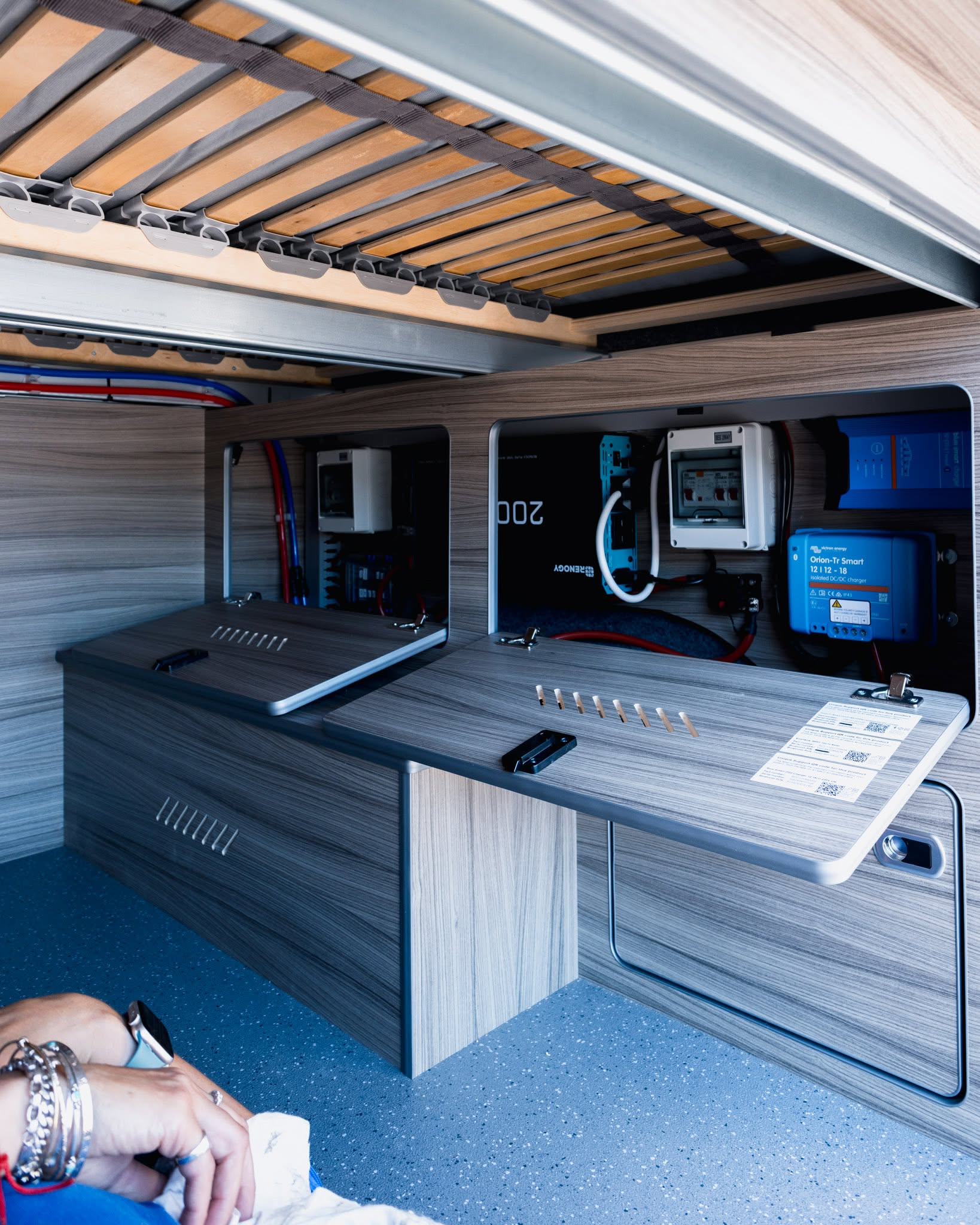
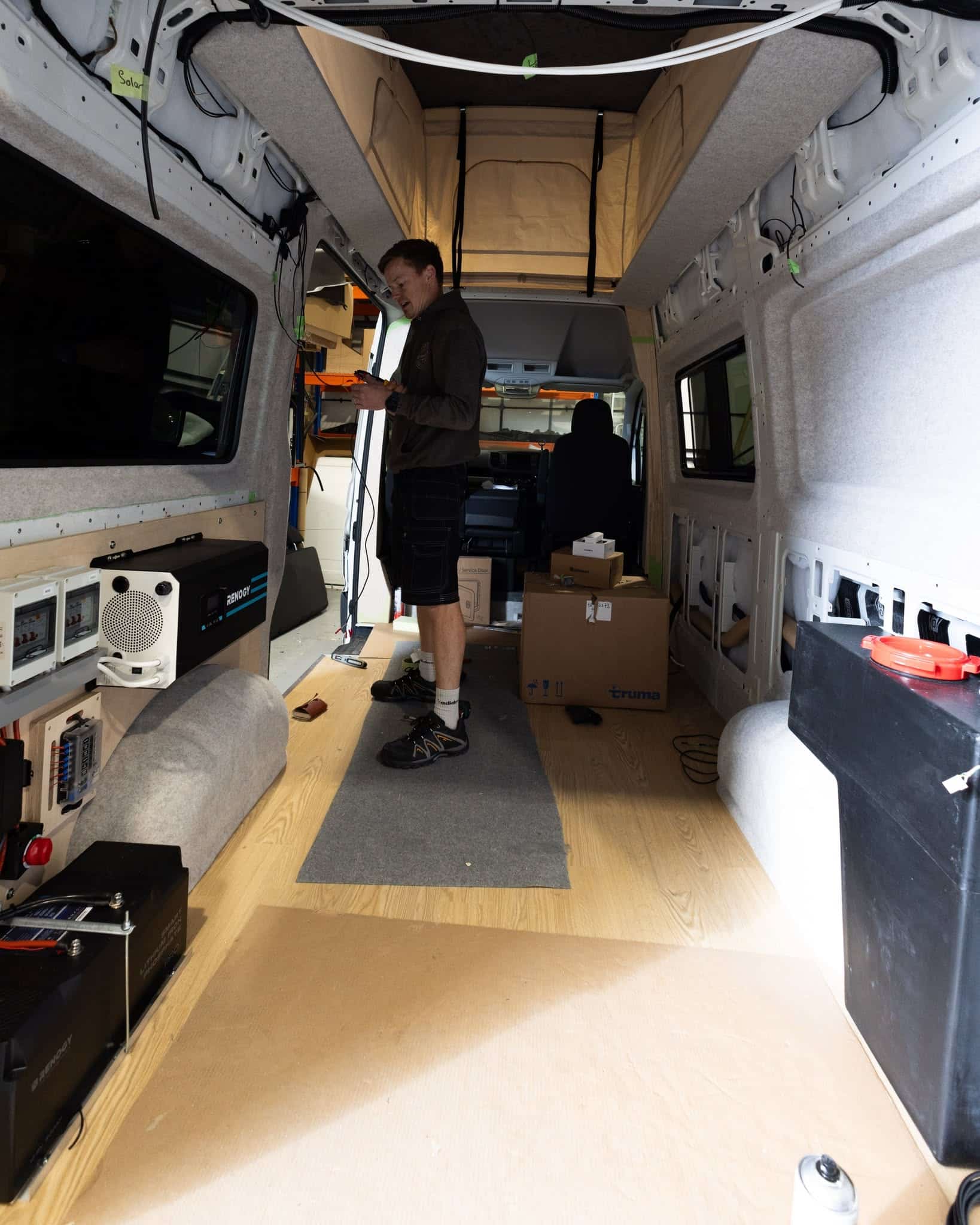
The location of batteries, solar cables, sockets, lighting and electrical equipment can then be incorporated into the furniture and interior from the start.
Tell us the make, model and year of your van, what electrical equipment you already have and what you’d like to be able to power.
If you’re unsure about battery size, solar capacity or which system is right for you, that’s fine — tell us how you plan to use the campervan and we’ll help work out the appropriate setup.
See some of the latest campervan conversions completed at Revampavan, including lithium battery systems, solar installations, off-grid electrical setups and complete touring conversions.
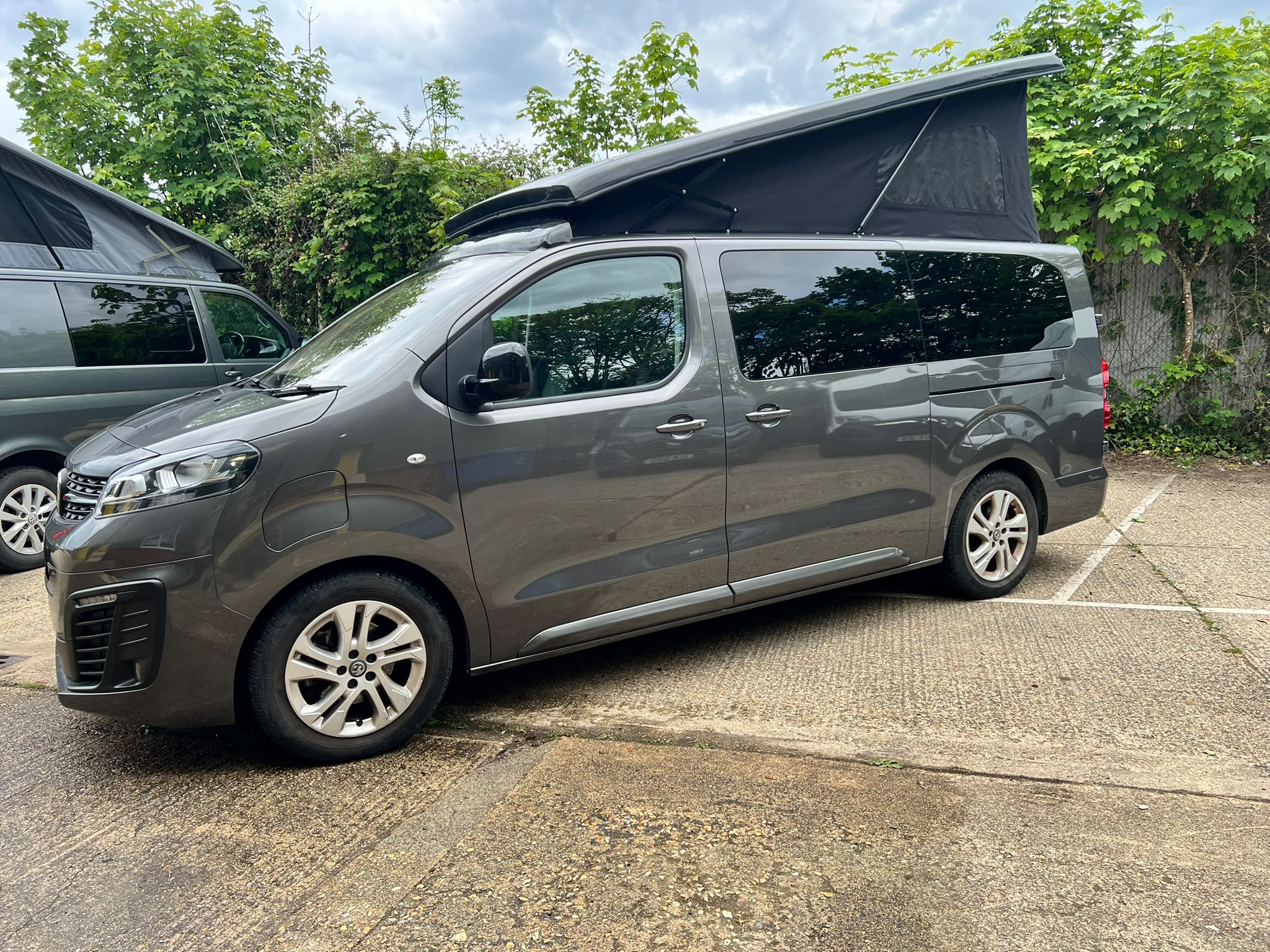
This 2026 Volkswagen T7 L2 H1 came to Revampavan from a customer in Lymington looking for a genuinely
This Peugeot e-Expert LWB came to Revampavan from a customer in London who wanted an electric campervan that
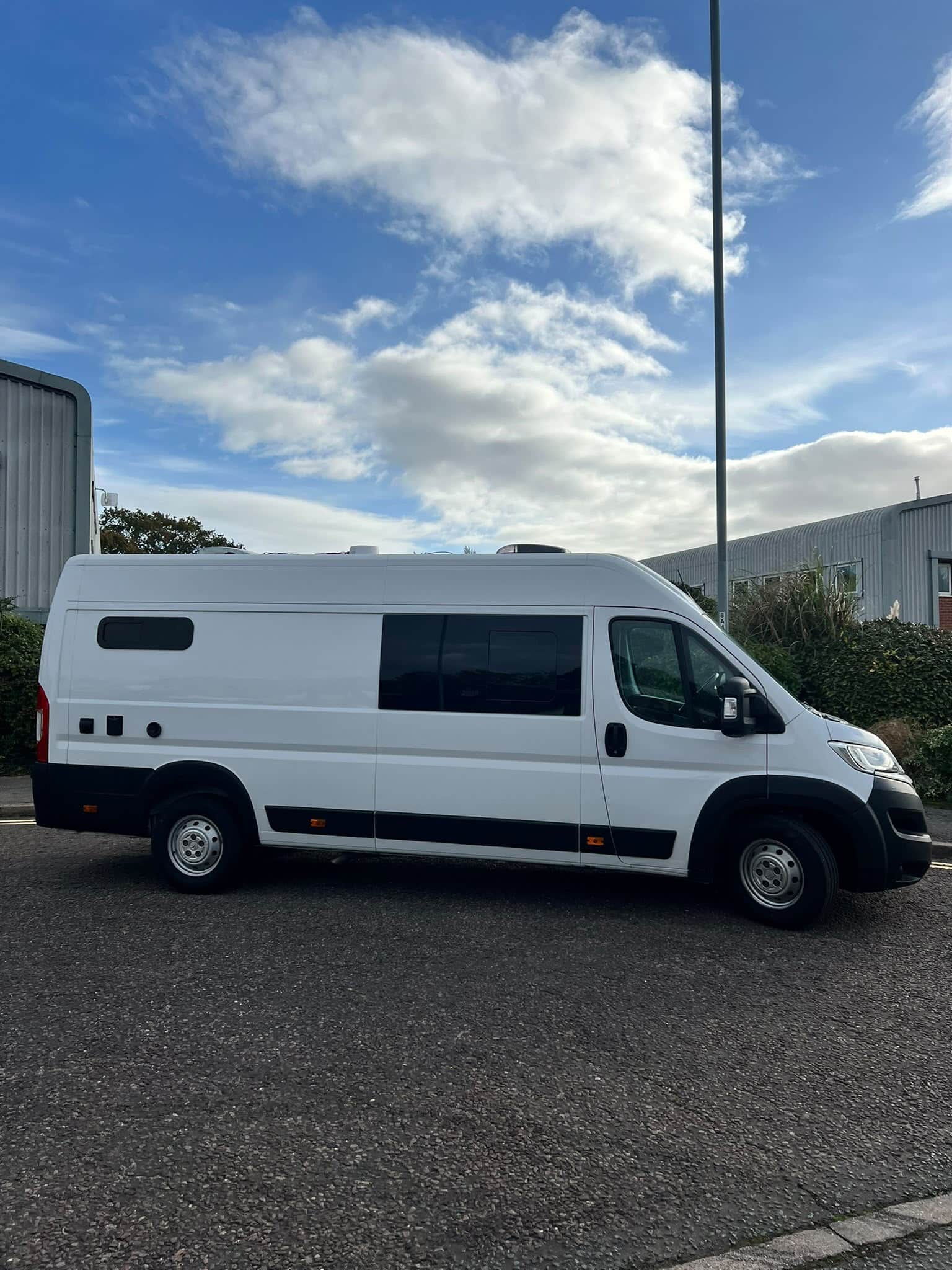
This Citroën Relay L4 H3 was converted for Jon and Clare from Totton using our Tourline Sport LWB
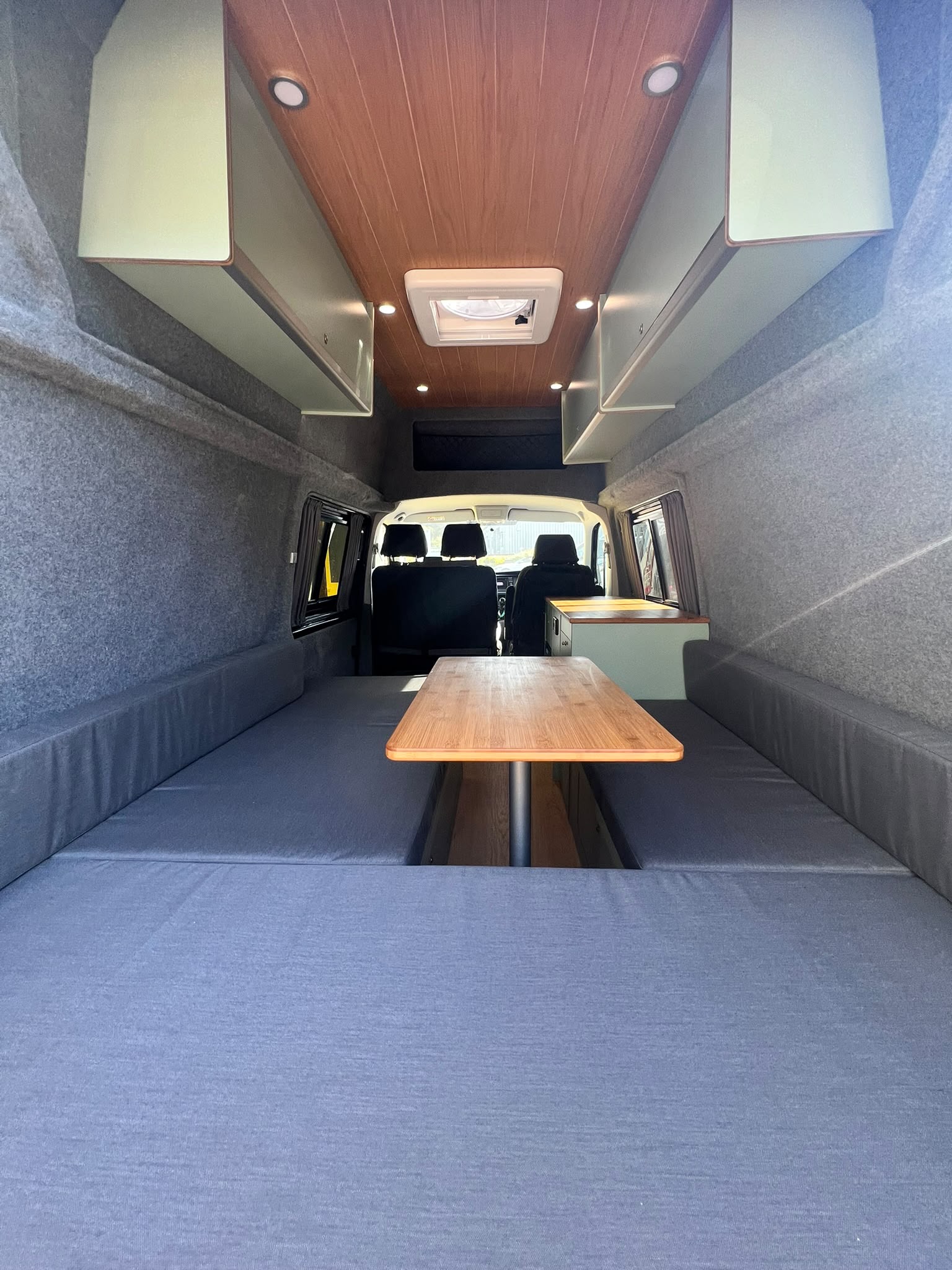
This long-wheelbase Volkswagen Transporter T5 was transformed with a bespoke version of our Waveline campervan conversion, making full
See what our customers have to say about their experience with Revampavan, from complete campervan conversions to individual upgrades and aftercare.


 Trustindex verifies that the original source of the review is Google.
 Trustindex verifies that the original source of the review is Google.
 Trustindex verifies that the original source of the review is Google.
 Trustindex verifies that the original source of the review is Google.
 recommendsTrustindex verifies that the original source of the review is Facebook.
 Trustindex verifies that the original source of the review is Google.
 Trustindex verifies that the original source of the review is Google.
 Trustindex verifies that the original source of the review is Google.

 Trustindex verifies that the original source of the review is Google.
 Trustindex verifies that the original source of the review is Google.
 Trustindex verifies that the original source of the review is Google. recommendsTrustindex verifies that the original source of the review is Facebook. recommendsTrustindex verifies that the original source of the review is Facebook. recommendsTrustindex verifies that the original source of the review is Facebook. recommendsTrustindex verifies that the original source of the review is Facebook. recommendsTrustindex verifies that the original source of the review is Facebook. recommendsTrustindex verifies that the original source of the review is Facebook. recommendsTrustindex verifies that the original source of the review is Facebook. recommendsTrustindex verifies that the original source of the review is Facebook. recommendsTrustindex verifies that the original source of the review is Facebook.
Available for medium and long wheelbase vans, Tourline Light is designed for comfortable longer-distance touring without a dedicated shower, toilet cubicle or hot water system.
A practical conversion for medium wheelbase vans, combining comfortable sleeping, storage and touring essentials in a space-efficient layout.
More space for longer trips, with additional living and sleeping flexibility. The LWB layout can sleep up to six and offers an optional pull-out bed and seating area.
Available for medium and long wheelbase vans, Tourline Sport is designed for longer trips and extended touring, adding hot water plus a dedicated shower and toilet cubicle for greater comfort while you’re away.
A fully equipped medium wheelbase conversion combining practical living and sleeping space with the added convenience of hot water and a dedicated bathroom.
More space for longer adventures, with additional living and sleeping flexibility alongside a hot water system and dedicated shower and toilet cubicle. The LWB can accommodate up to six berths with the available options.
Our Tourline range is designed for larger vans, longer journeys and spending more time away. Start by choosing between Tourline Light and Tourline Sport, then select the medium or long wheelbase version that suits your van.
A practical touring conversion with the essentials for comfortable trips away, without a dedicated hot water system, shower or toilet cubicle. Available in MWB and LWB configurations, with a 70L fridge and optional elevating roof.
Designed for longer trips and greater independence, Tourline Sport adds hot water plus a dedicated shower and toilet cubicle. Available in MWB and LWB configurations, with a 70L fridge and optional elevating roof.