A campervan water system is simpler than it looks, and getting it right makes daily life on the road far more comfortable.
Running water for cooking, washing up and freshening up is one of the things that separates a proper camper from a van with a bed in it.
This guide explains the parts of a water system, from fresh and waste storage to pumps, taps and hot water, so you can plan a setup that suits how you travel.
Fresh water storage
Everything starts with fresh water storage.
You can carry it in a fixed tank plumbed into the van, which holds more and stays out of the way, or in portable containers you refill at a tap, which are cheaper and easy to remove for cleaning.
Tank size is a balance: more water means fewer refills but more weight to carry, and water is heavy. A weekender might be happy with 20 to 40 litres, while longer off-grid trips call for more.
Match the capacity to how long you want to go between top-ups, and remember that fresh water taps are easy to find at campsites, service points and many car parks, so you rarely need to carry days of supply at once.
The pump
A pump moves water from the tank to the tap. Most builds use an electric pump that runs on 12V, and it comes in two common forms.
A submersible pump sits inside the tank and switches on when you open a tap, which is simple and quiet.
A diaphragm pump sits in the pipework and holds pressure, giving a stronger, more consistent flow that feels closer to home. Both work well, and the right choice depends on the flow you want and the rest of your setup.
Taps and sink
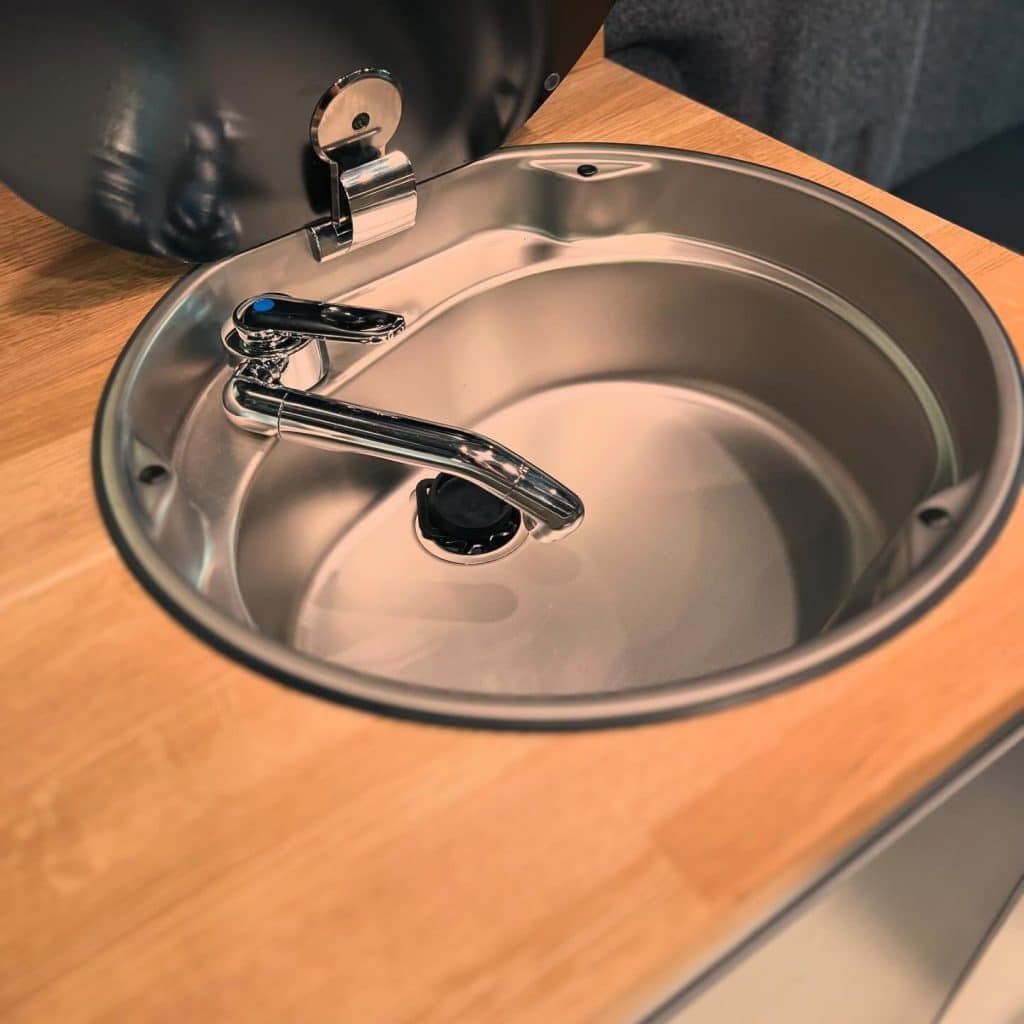
The tap and sink are where the system meets daily life.
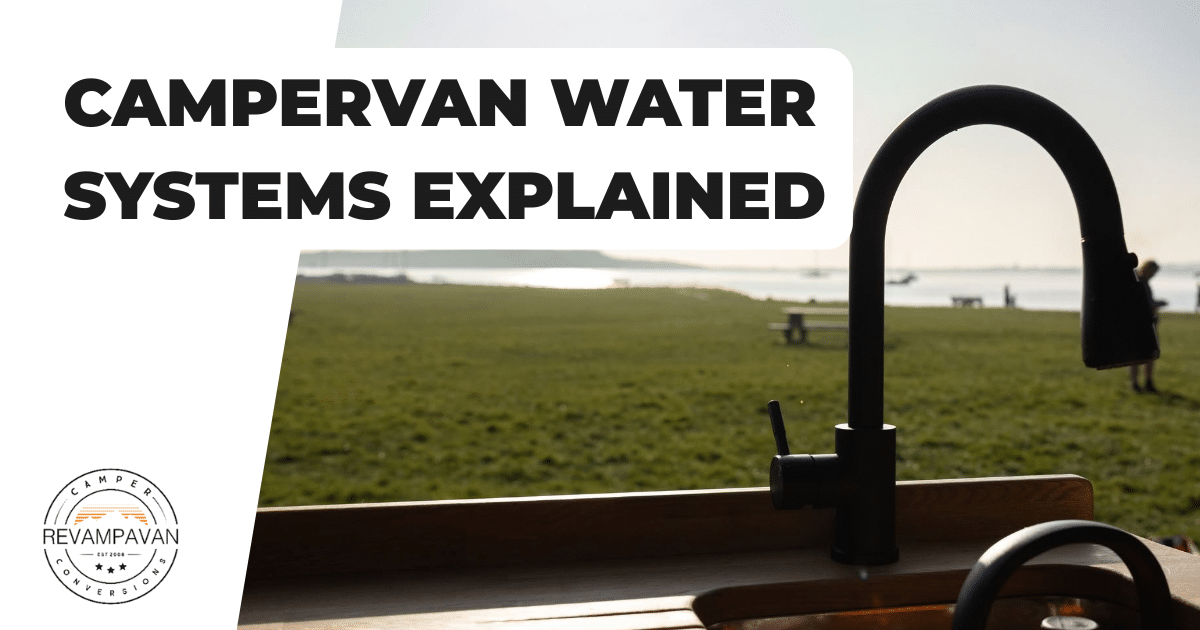
A simple tap over a compact sink covers cooking and washing up, and a mixer tap adds comfort if you are running hot water too.
Keep the sink proportionate to the van: a modest bowl saves space and still does everything you need, while a large sink eats into precious worktop. This is the part of the system you use most, so it is worth getting the ergonomics right.
Waste (grey) water
Water that drains from the sink has to go somewhere, and that somewhere is a waste, or grey, water container.
It can be a portable tank you empty at a proper disposal point, or a fixed underslung tank for larger builds.
Either way, you should never let it drain onto the ground, both out of courtesy and because many sites require proper disposal.
Sizing the waste tank to roughly match your fresh tank keeps things balanced, so you are not emptying grey water far more often than you refill fresh.
Hot water options
Hot water ranges from simple to luxurious.
The easiest option is to heat water on the hob in a kettle or pan, which costs nothing extra and suits many campers.
For running hot water at the tap, you can fit a calorifier that uses heat from a diesel heater, or an on-demand gas or diesel water heater that warms water as it flows.
Hot water on tap is a real comfort, especially for washing up and freshening up, but it adds cost and complexity, so decide how much you will genuinely use before committing to it. We Offer this in our Tourline Sport Packages as well as our smaller van conversion packages…
Drinking water and filtration
Water carried in a tank is fine for washing and cooking, but many owners like to filter it before drinking.
A simple inline filter on the drinking tap removes sediment and improves the taste, which matters when you are filling up from different taps around the country.
Keeping the fresh tank clean is just as important, because water that sits in a warm tank can go stale.
Rinsing and refreshing the tank regularly, and not leaving water standing in it for weeks between trips, keeps what comes out of the tap clean and pleasant.
How it all connects
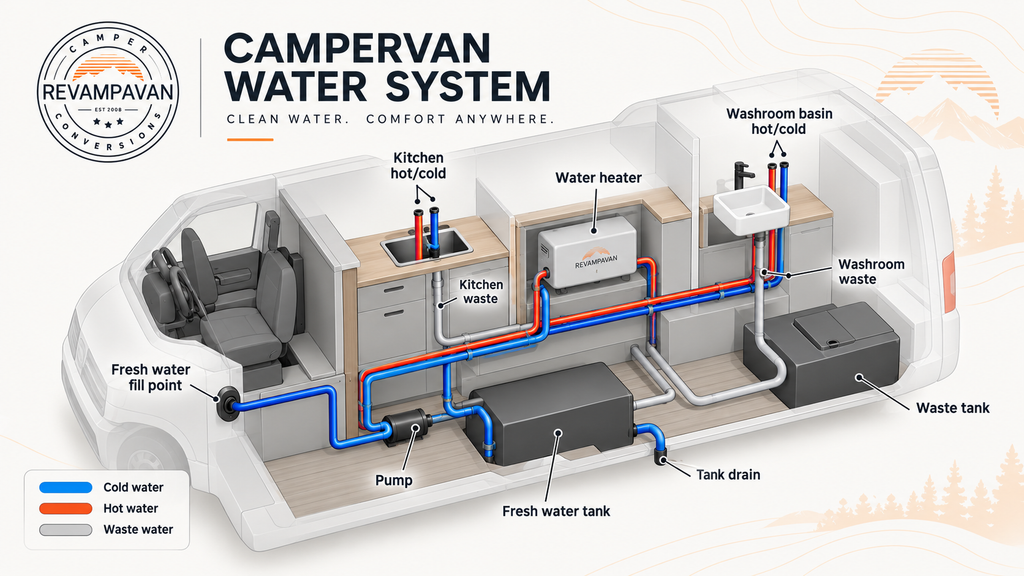
It helps to picture the whole loop.
Fresh water sits in the tank, the pump pushes it to the tap when you open it, water drains from the sink into the waste container, and, if you have it, a heater warms water on its way to a mixer tap.
Each part is simple on its own, and the skill is in joining them neatly so the pipework is tidy, accessible and easy to service.
A well-planned layout keeps the tanks where they are easy to fill and empty, and the pump and connections where you can reach them if anything ever needs attention.
Sizing and winter care
Size the system around your trips rather than the biggest tanks you can fit, because every litre adds weight that affects handling and fuel.
In winter, water systems need a little care: drain them down before a hard frost so nothing freezes and splits, and clean and sanitise the fresh tank now and then to keep the water fresh and safe.
A well-maintained system stays reliable for years and gives you clean water whenever you turn the tap. A few minutes of care at the end of the season saves you from split pipes and a costly repair come spring.
Plan the right system for your van
We design and install water systems and kitchens to suit the way you travel, from a compact weekender setup to a full system with hot water, as part of our conversion packages and bespoke builds. If you would like a system planned around your van and your trips, get in touch and we will help you get it right.