One of the most common questions we hear is how much solar power a campervan needs, and the honest answer is that it depends on how you use the van.
Solar is the quiet workhorse of off-grid camping, topping up your battery whenever the sun is out so you can stay away from hook-ups for longer.
This guide shows you how to work out the right amount for your setup, and why the British weather means you should plan a little more generously than you might think.
The short answer
Most UK campervans carry somewhere between 100W and 400W of solar.
A couple who camp at weekends with a fridge, lights and phone charging often manage well on 150W to 200W.
A family living in the van for longer trips, running a bigger fridge and more devices, is better served by 300W to 400W.
The exact figure comes down to how much power you use each day and how long you want to stay off-grid, so it always pays to start with your usage rather than a headline wattage.
What solar actually does
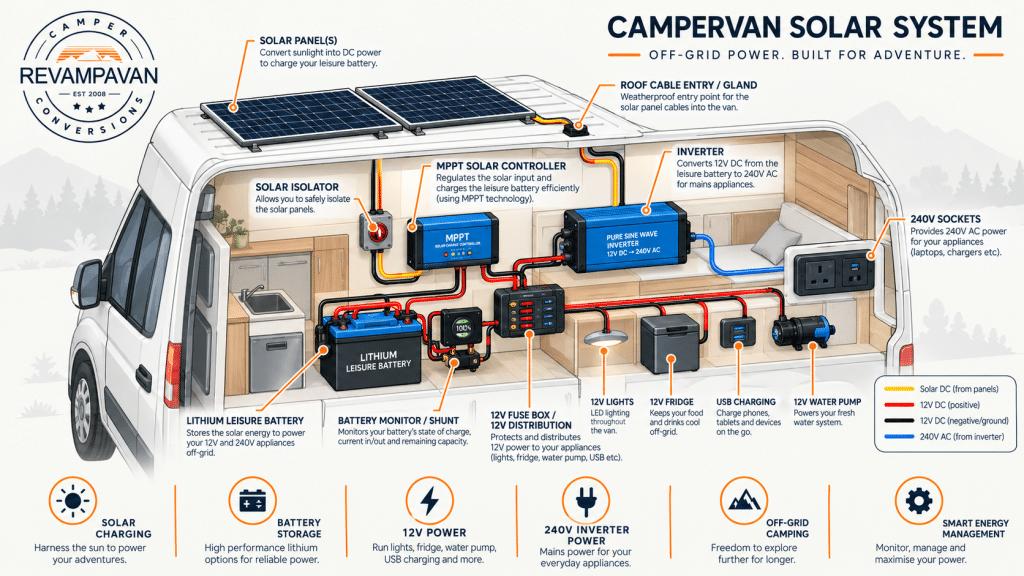
Solar panels do not power your appliances directly.
Instead, they top up your leisure battery, which then runs everything in the van. Think of solar as a slow, steady trickle that refills the tank during daylight, while your appliances draw from that tank around the clock.
This is why solar and battery capacity go hand in hand: there is little point fitting big panels to a tiny battery, or a huge battery you can never refill. The two need to be balanced for the system to work well.
Work out your daily power use
Start by listing what you run and for how long.
A compressor fridge is usually the biggest draw, followed by lighting, the water pump, and charging phones, tablets and a laptop. Add a heater fan in colder months.
Each of these uses a certain number of amp-hours a day, and once you total them up you have a target: the amount of power your solar and charging need to replace daily.
Even a rough calculation puts you far ahead of guessing, because it tells you whether 150W will keep up or whether you need to double it.
Panels, controllers and pairing
Two panel types are common.
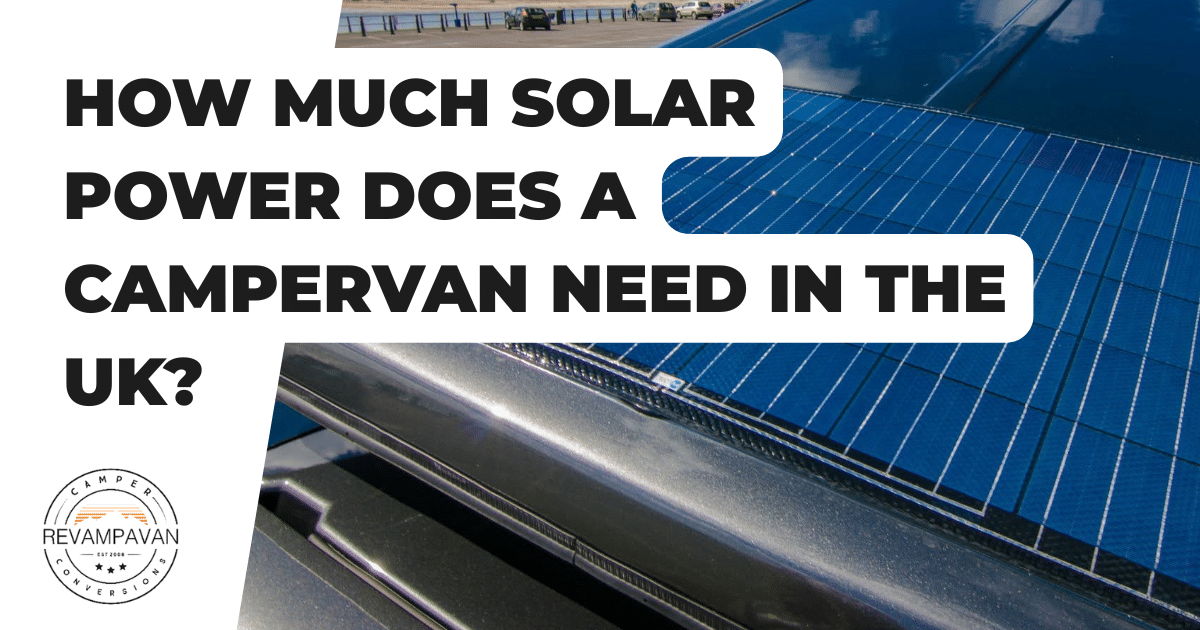
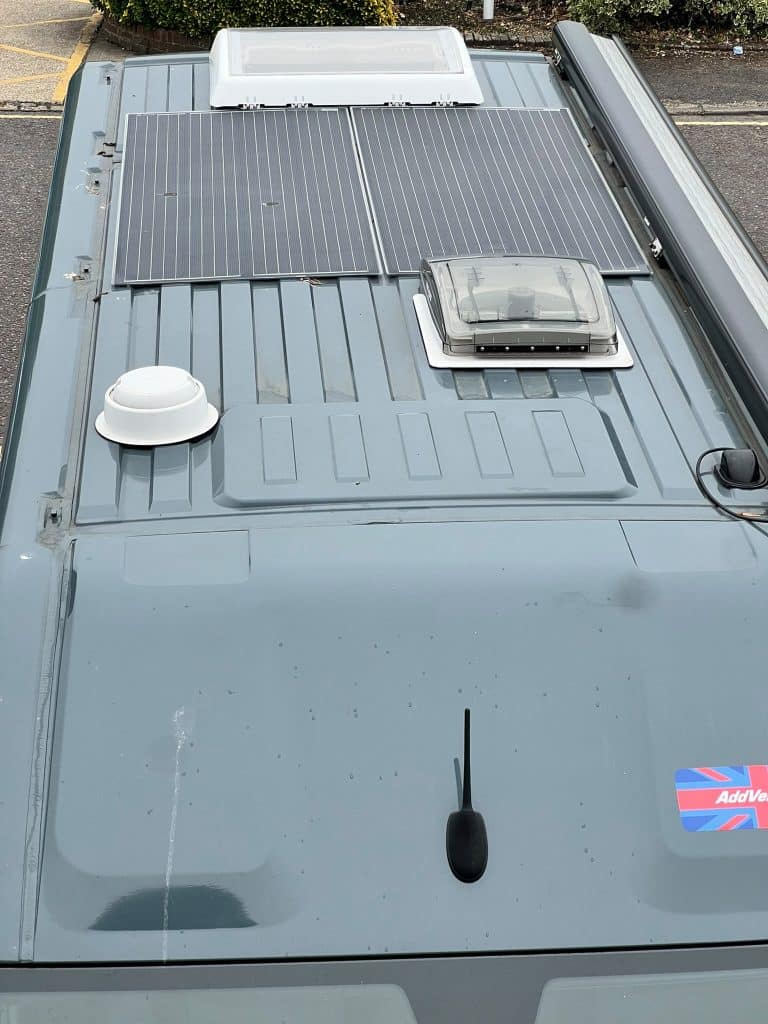
Rigid panels are efficient and hard-wearing, while flexible panels sit flush and suit curved roofs, though they tend to run a little less efficiently. Whichever you choose, the panels feed through a charge controller, and an MPPT controller squeezes noticeably more out of your array than an older PWM type, especially in poor light.
For serious off-grid use, pairing good panels with a lithium battery and a DC-to-DC charger from the engine gives you three ways to keep the battery full: sun, driving and, when you need it, hook-up.
Where the panels go, and shading
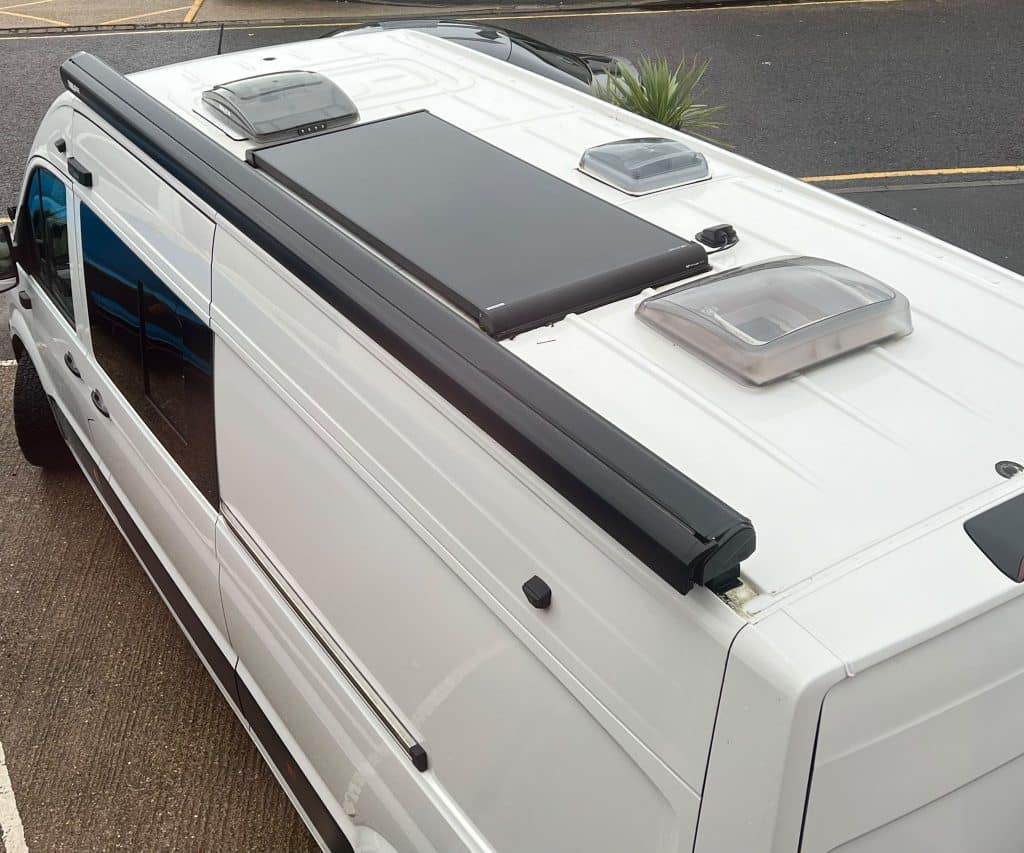
Where you fit the panels matters almost as much as how many you fit. Most campers mount rigid or flexible panels flat on the roof, which is simple and works well, though flat panels lose a little output compared with angled ones.
The bigger enemy is shade: even a small shadow from a roof vent, an aerial or an overhanging branch can knock out a surprising amount of a panel, because shading part of a panel drags down the rest.
Parking with the roof in the sun, and keeping the panels clear of clutter, makes a real difference to what you gather on any given day.
Fixed panels or a portable option
Roof-mounted panels are the mainstay because they work whenever the van is parked in daylight, with nothing to set up. Some owners add a portable folding panel on a lead as well, which you can angle towards the sun and move into a sunny patch while the van sits in shade.
It is a neat way to squeeze extra power out of a dull day or a shaded pitch, though it is an extra thing to carry and set up. For most people a well-sized roof array does the job, with a portable panel as an optional top-up for longer off-grid stays.
When you still need a hook-up
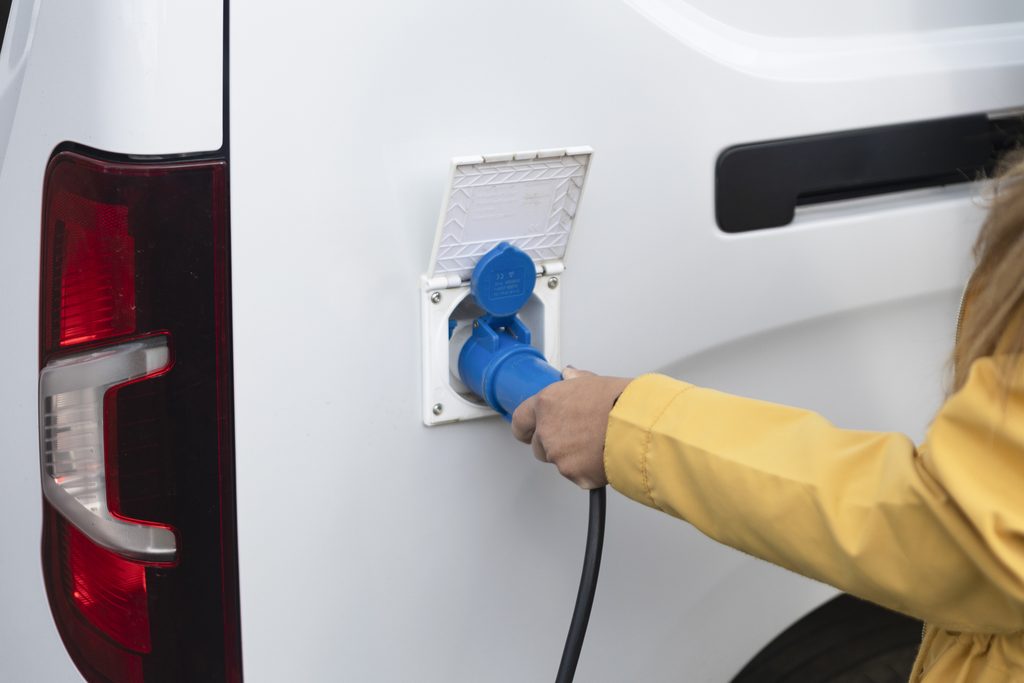
Solar handles the everyday load beautifully, but it has limits.
Running a kettle, microwave or hairdryer draws more than panels can realistically replace, so if those matter to you, plan to use them on a campsite hook-up rather than expecting solar to cover them.
For most owners this is no hardship, because solar keeps the fridge, lights and charging going indefinitely, and the occasional hook-up handles the rest.
Get the right setup for your van
The best solar setup is the one matched to your battery, your appliances and the seasons you travel in. We design and fit solar and electrical systems as part of our conversion packages and bespoke builds, sized around how you actually use the van.
If you would like help working out the right array for your plans, get in touch, and we will size it and fit it for you.