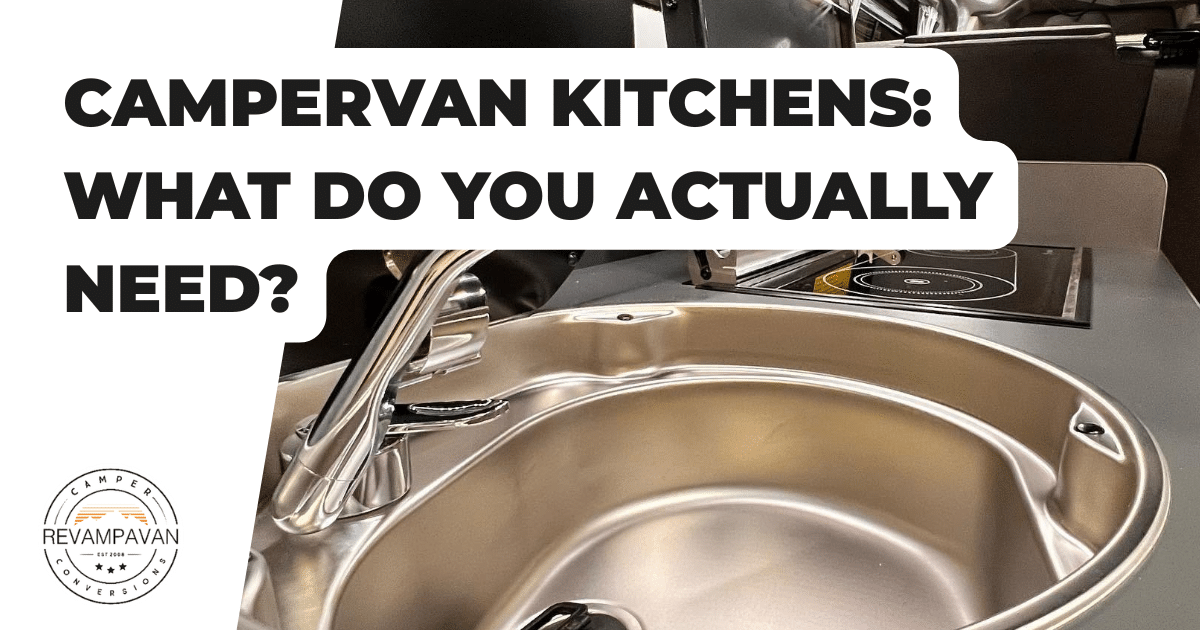
A good campervan kitchen turns a van into a home, but it is easy to over-complicate it.
Space is precious, so the trick is to fit what you will genuinely use and leave out what only looks good in a brochure.
This guide runs through the parts of a van kitchen, explains the choices behind each one, and helps you decide what you actually need for the way you cook and travel.
The essentials
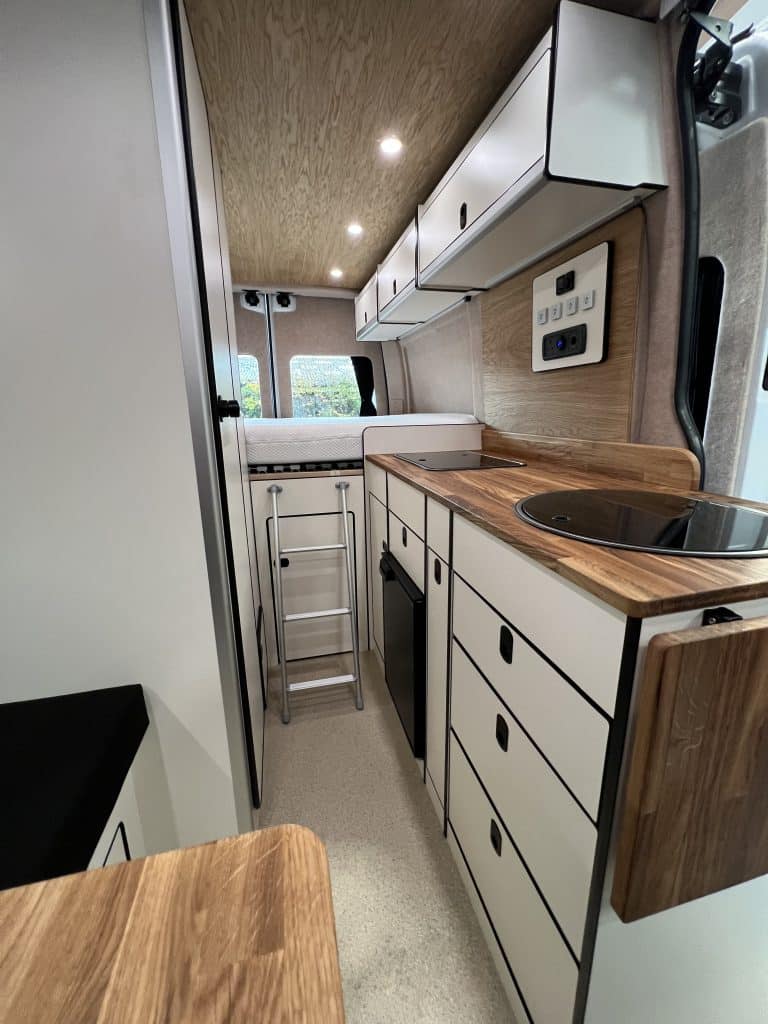
Most van kitchens come down to a handful of core parts: something to cook on, somewhere to keep food cold, a sink with running water, a worktop to prepare on, and storage for pans, plates and food. Nail those five, and you have a kitchen that works.
All the essentials and more are included in our full campervan conversion packages!
Everything beyond them is a nice-to-have that you add only if the space and budget allow, and only if it earns its place on the trips you actually take.
Cooking: hob options
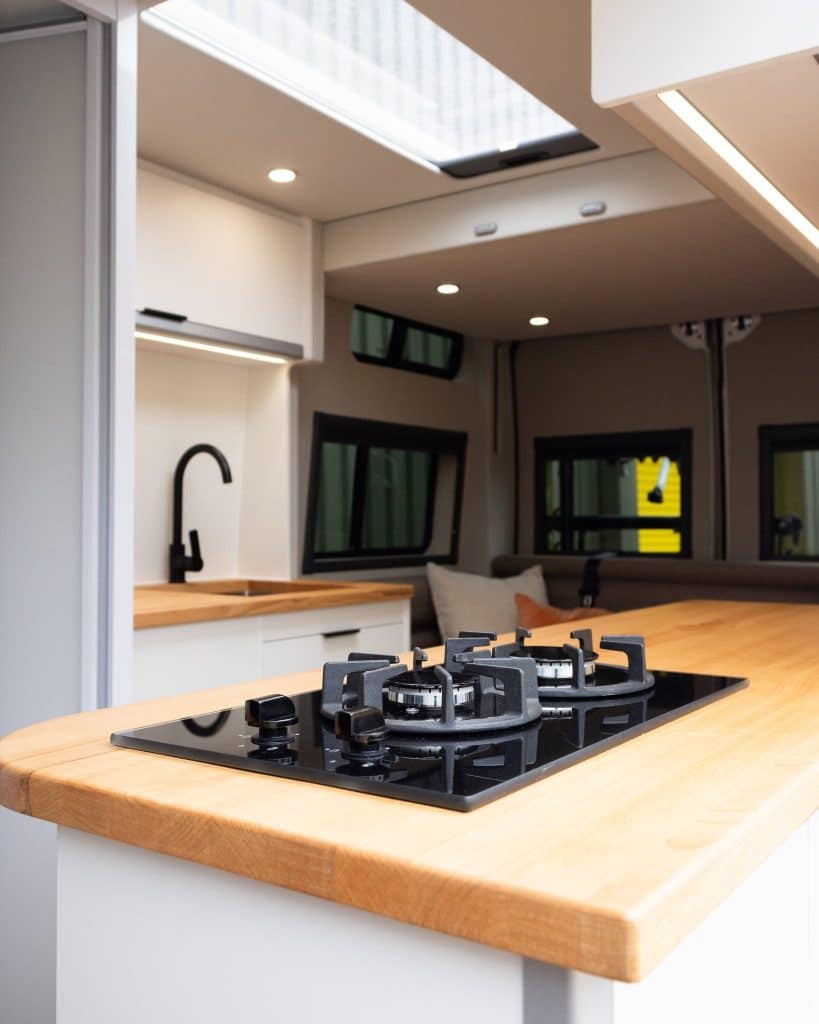
Your hob is the heart of the kitchen, and you have a few routes. A gas hob is the traditional choice, simple and powerful, and it works without draining your battery.
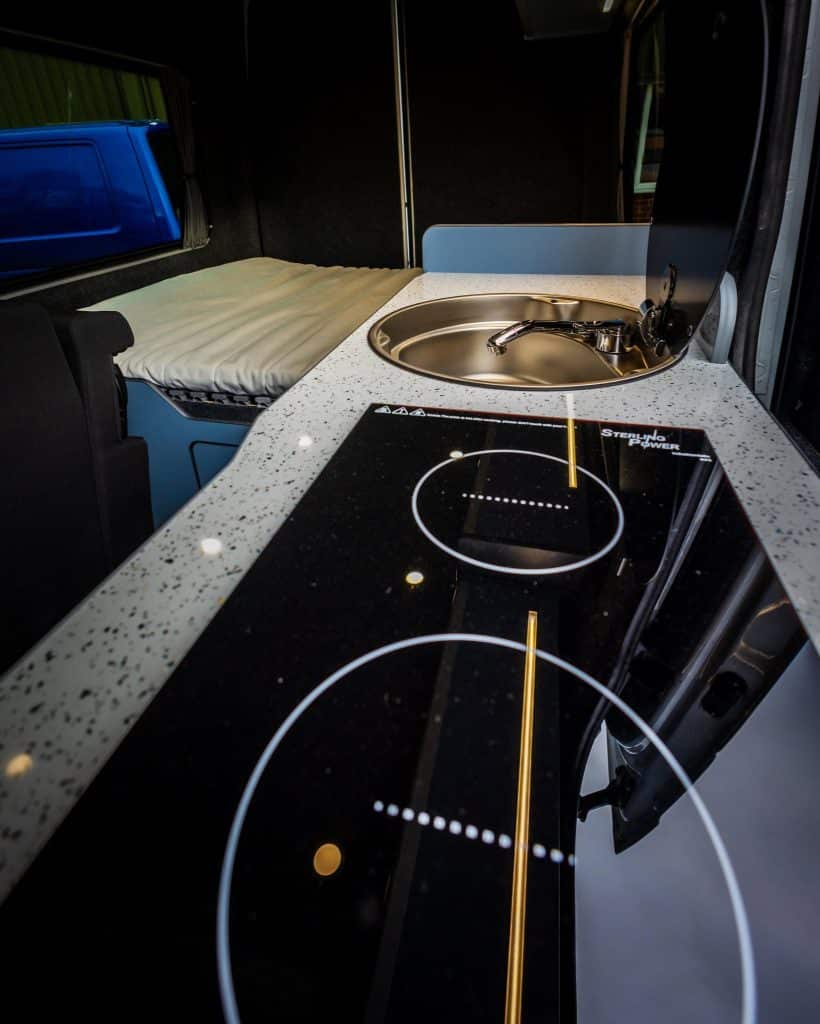
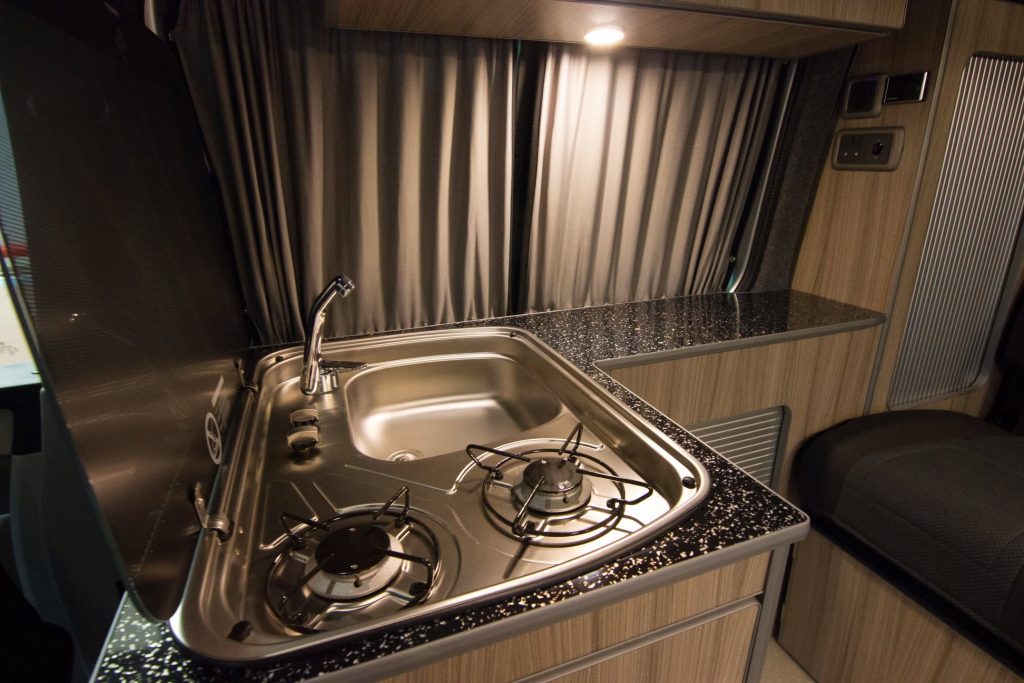
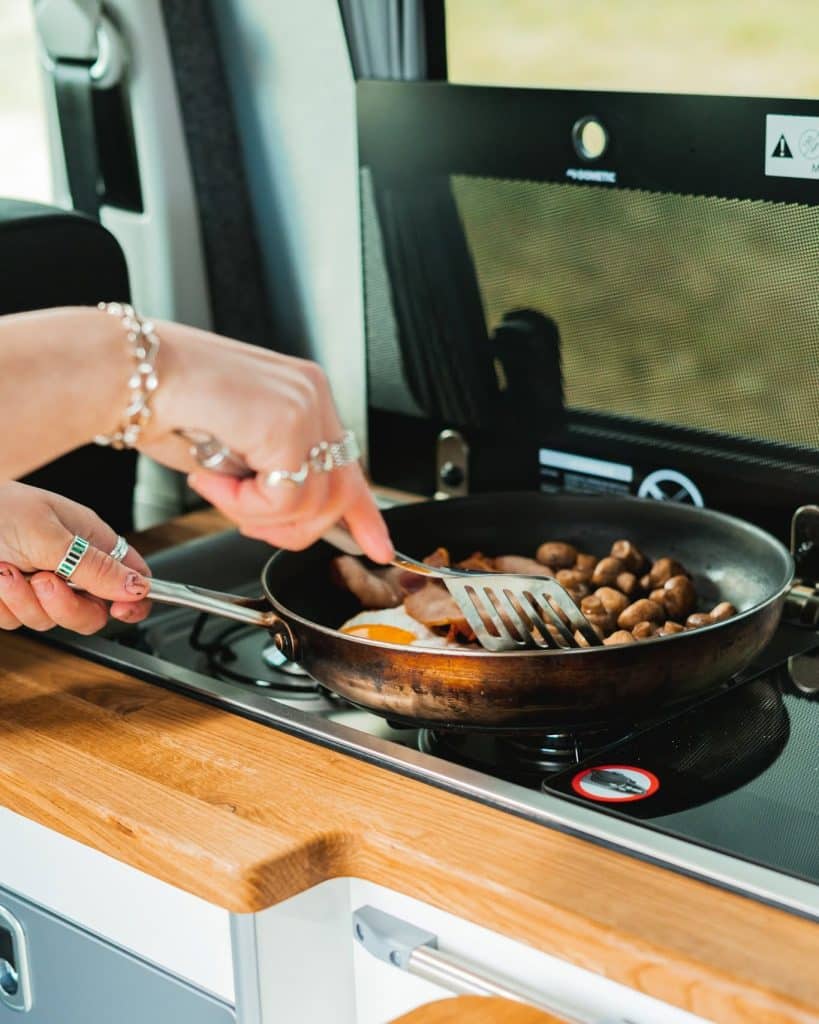
An induction hob runs on electricity, which keeps the van gas-free and is very controllable, but it needs a strong battery and charging setup to use off-grid. Many owners keep it simple with a two-burner gas hob, which handles everything from a morning fry-up to an evening one-pot dinner without fuss.
Keeping food cold: the fridge
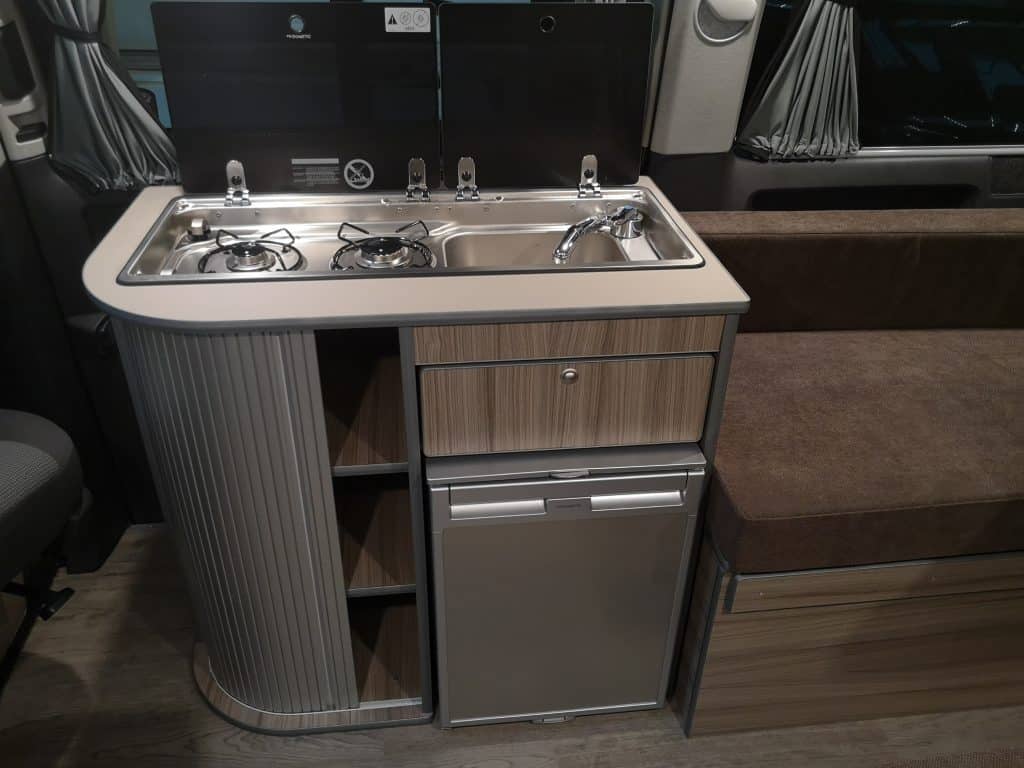
A fridge is where comfort really shows. A compressor fridge runs efficiently on 12V and keeps food cold in hot weather, which is why it suits most modern builds with a decent battery.
A three-way fridge can run on gas as well as electricity, which appeals to those who spend long spells off-grid without much solar. Whichever you choose, size it to your trips: a couple away for weekends needs far less than a family catering for a week.
Sink and water
A sink with a tap makes cooking and washing up far more pleasant than wrestling with bottles of water. It connects to a simple water system with a fresh tank, a pump and a waste container, which you can keep as compact or as generous as you like.
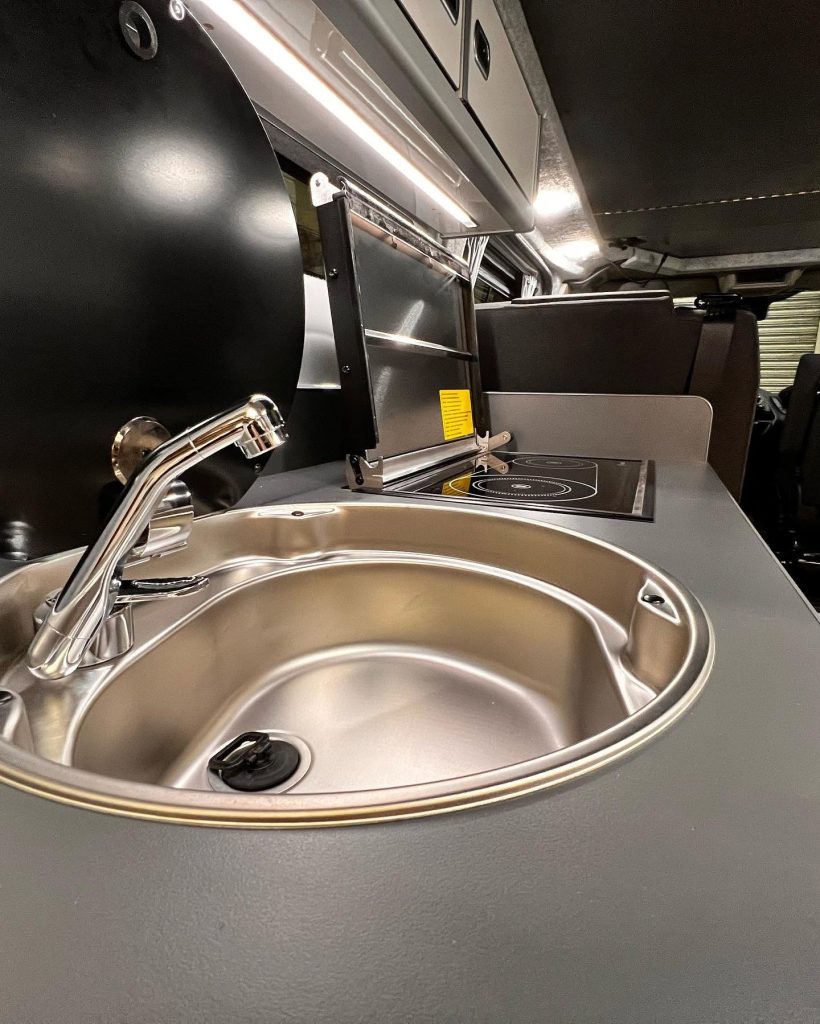
Even a small sink adds a surprising amount of everyday convenience, so it is rarely worth leaving out.
Worktop and storage
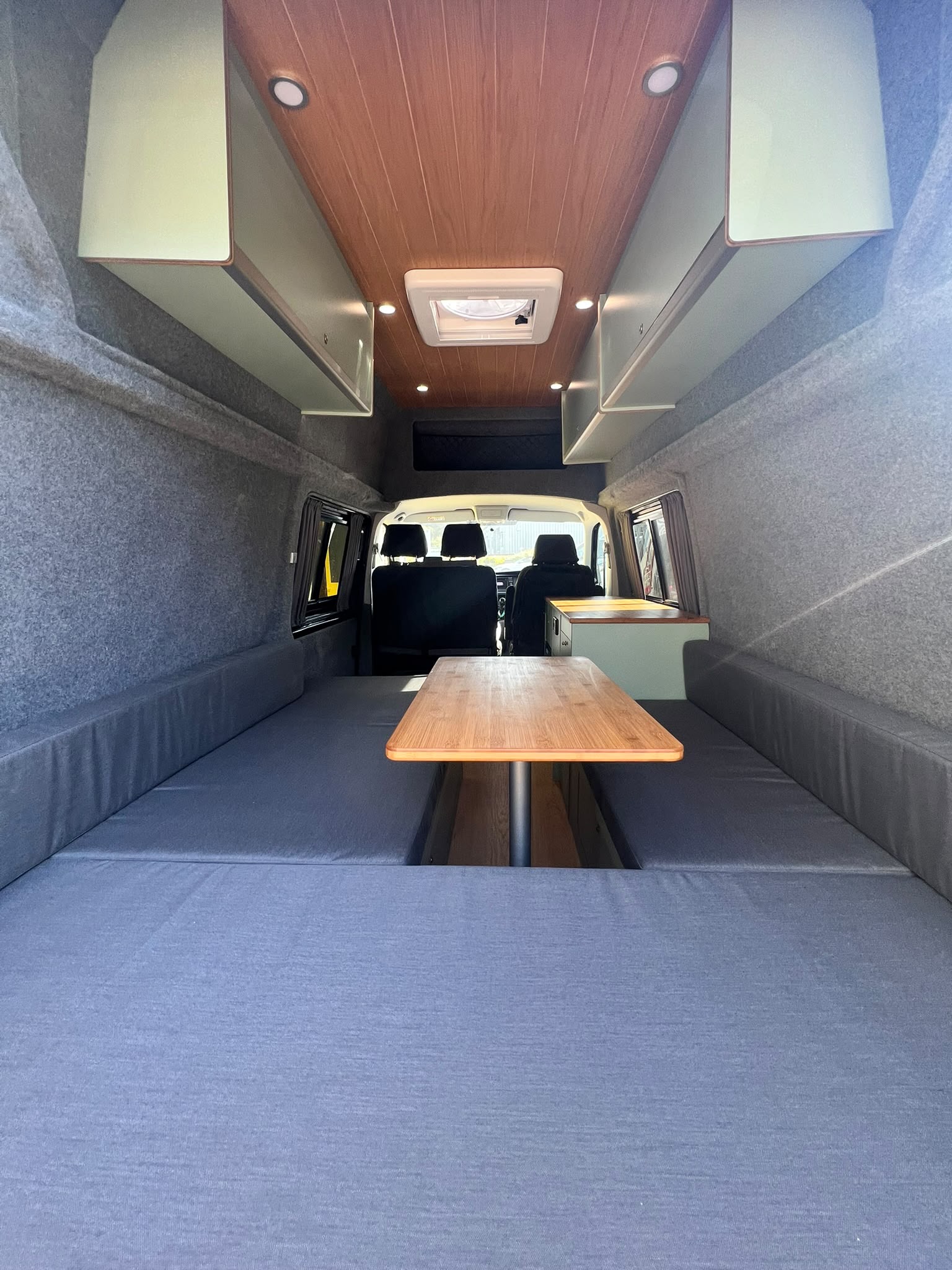
Preparation space is always in short supply, so a solid worktop earns its keep, and a hinged extension or a section over the hob and sink gives you more room when you need it.
Below and around it, well-planned cabinets and furniture keep pans, food and utensils secure while you drive and easy to reach when you stop.
Good storage is what stops a small kitchen from feeling cramped, because everything has a home rather than sliding around the van.
Indoor, outdoor or both
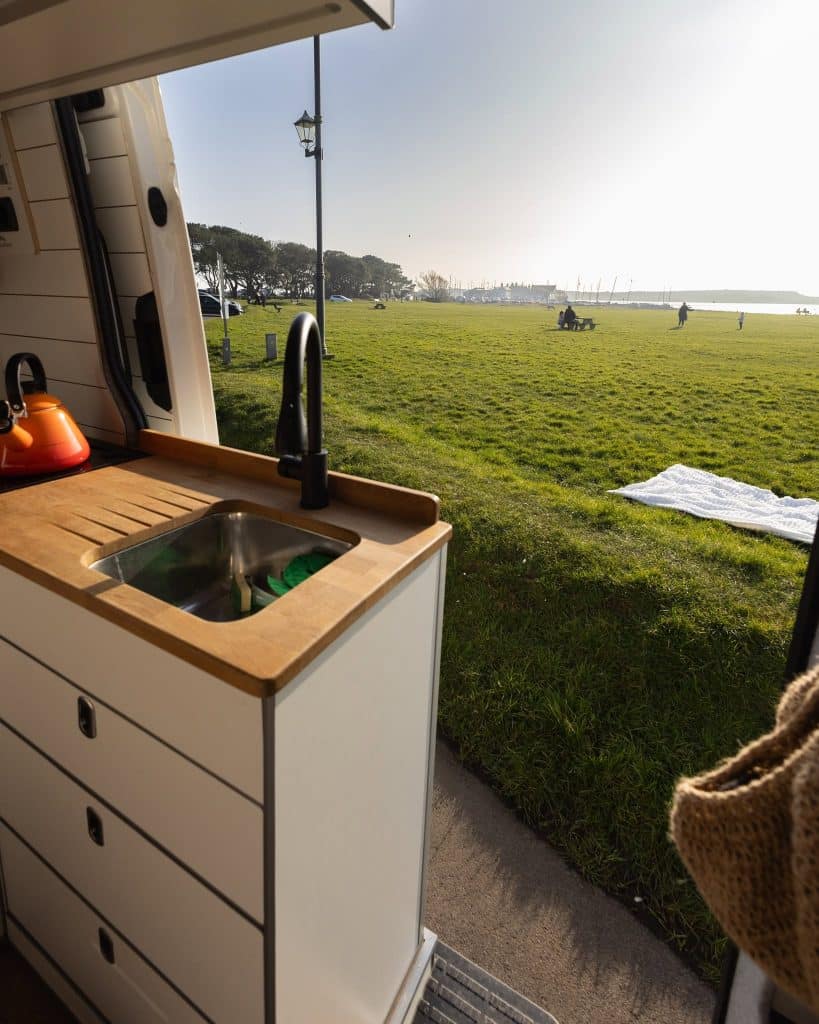
Not every kitchen has to sit inside. Some owners love an outdoor setup, with a slide-out hob or a tailgate kitchen that keeps cooking smells and heat out of the living space, which suits fair-weather campers and smaller vans.
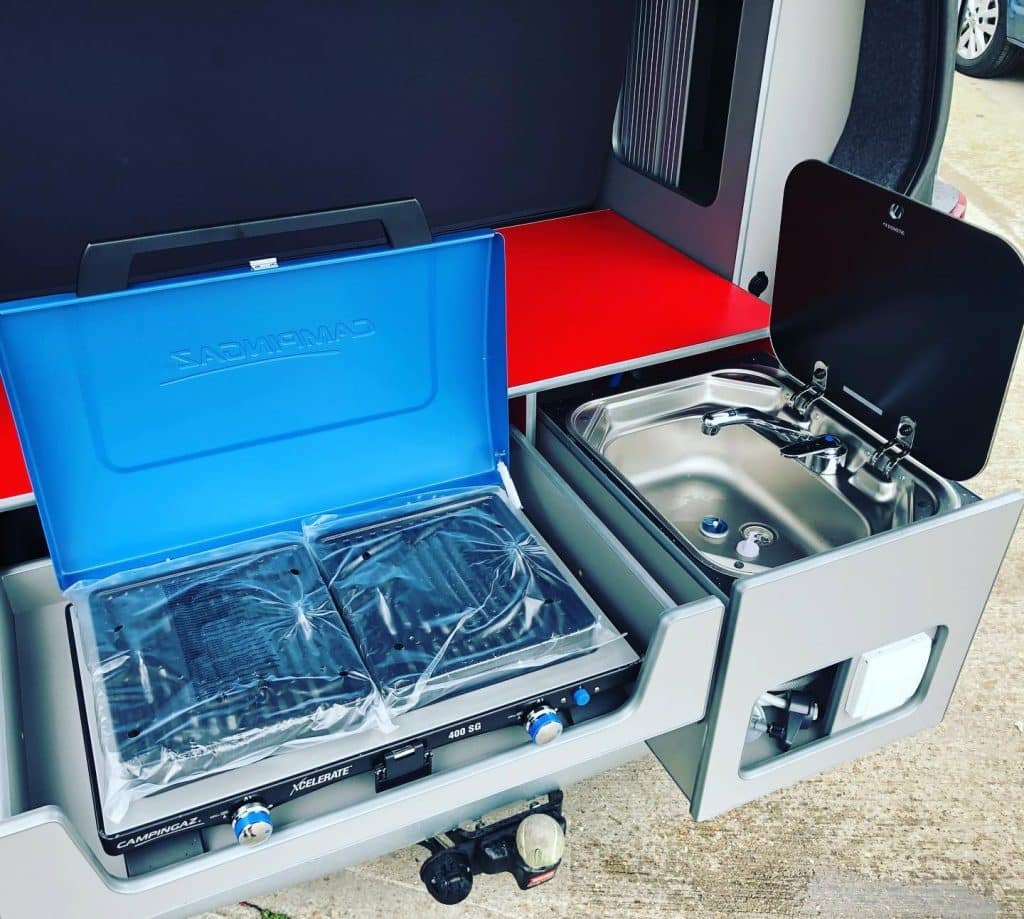
Others prefer everything indoors so they can cook whatever the weather. Plenty of vans do both, with a compact indoor hob for the mornings and a slide-out unit for bigger cook-ups outside on a sunny evening. There is no wrong answer, only the layout that matches how and where you like to cook.
Powering the kitchen
Your kitchen and your electrical system are closely linked, so it pays to plan them together. A compressor fridge and any electric cooking draw from your leisure battery, so if you want to run an induction hob or a big fridge off-grid, your battery, solar and charging all need to be up to it.
If you cook on gas instead, you take that load off the battery entirely, which keeps the electrical side simpler.
Deciding early how you want to cook shapes the rest of the build, so it is worth settling before the units go in.
Gas safety and ventilation
If you cook with gas, safety comes first.
A gas system should be installed correctly, with the bottle stored in a sealed, vented locker and the pipework fitted properly, and it is well worth having it checked by a qualified engineer.
Good ventilation and a carbon monoxide alarm are essential in any van where you cook, because a sealed living space and combustion do not mix.
These are not optional extras but the basics of a safe kitchen, and they are another reason many owners prefer a professional to handle this part of the build.
What you can skip
It is just as useful to know what to leave out. Ovens, large fixed showers and elaborate appliances are not always needed.
A compact, well-planned kitchen with a good hob, a proper fridge and clever storage beats a cramped one crammed with gadgets.
Be honest about the meals you actually cook on trips, and build around those. Many happy campers cook superb food on two gas burners and a single pan, so do not feel you need a miniature version of your kitchen at home.
Design a kitchen that fits your trips
We design and build campervan kitchens around the way you travel, from a simple weekender galley to a fully featured setup, as part of our conversion packages and bespoke builds. If you would like help planning a kitchen that fits your van and your cooking, get in touch and we will map it out with you.